
April's Postcard from Rome
An Etruscan Jaunt, and (possibly) the tomb of a king of Rome

Rome is glorious and interminably interesting, but sometimes one yearns for a trip out of town. There are many good ones I love taking folk on—Ostia Antica (post incoming soon); an ancient villa and Renaissance hydraulic bling at Tivoli; the birth of Christian monasticism at Subiaco; aqueducts and ancient roads, and possibly the odd sheep on the Appian Way; the list is endless—but perhaps one of the most evocative themes is that of the Etruscans.

Like all of my routes there are umpteen possible variations which depend on all sorts of things—specific interests, mobility, the age of any children in the group, weather, the general mood on the day—after all the point of a private guide is infinite (almost) flexibility. Last week I had a request to visit sites at both Cerveteri and Tarquinia. This was a long-awaited trip, enthusiasm was high, and we had the most wonderful day amid crisp blue skies and dappled spring sunshine. Our delightfully amenable driver thoroughly entered into the spirit of the thing and ferried us in his smart Mercedes van across the countryside of coastal Northern Lazio.

We saw one of the finest Greek vases in existence (about which more anon) which is on display in the charming two room museum in the bijou castle of Cerveteri;
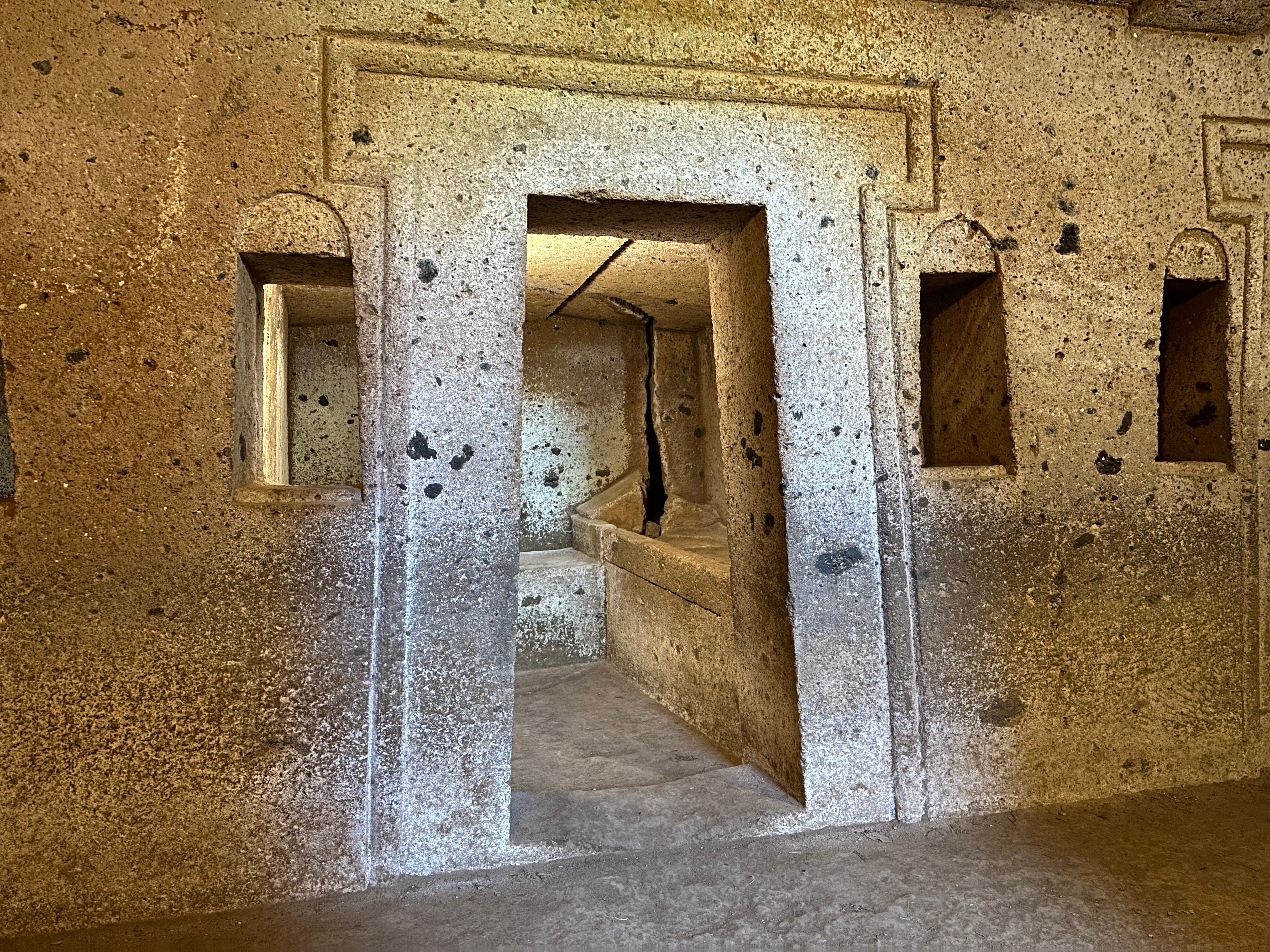
we explored tombs carved into the volcanic tuff at the Banditaccia, one of the necropoli of ancient Caere; we went to look at the sea on the site of ancient Pyrgi at Santa Severa where the Cyclopean masonry of the Etruscan port was subsequently incorporated into the castle and swore we caught a glimpse of Etruscan and Phoenician ships on the horizon.

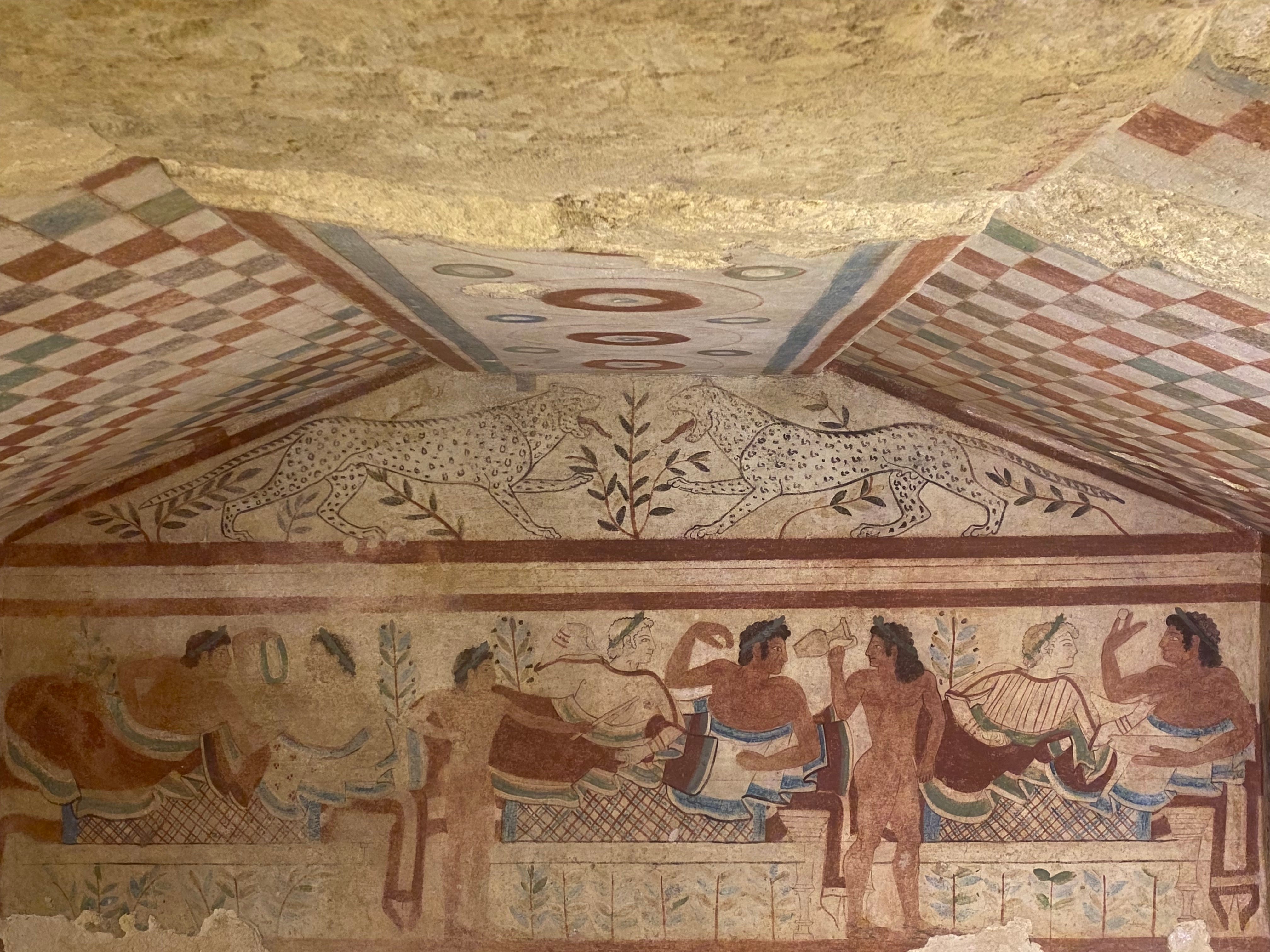
After a spot of lunch we went to the Necropoli dei Monterozzi at Tarquinia to admire the dizzyingly glorious paintings and then, just as we were about to return to Rome, I thought we should make a swift extra stop. Rocco, our charming driver, didn’t bat an eyelid as we took his smart van down a muddy dirt road and was every bit as enthusiastic as the delightful folk who had booked the tour when we got out at the Tumulo del Re, the Tumulus of the King.
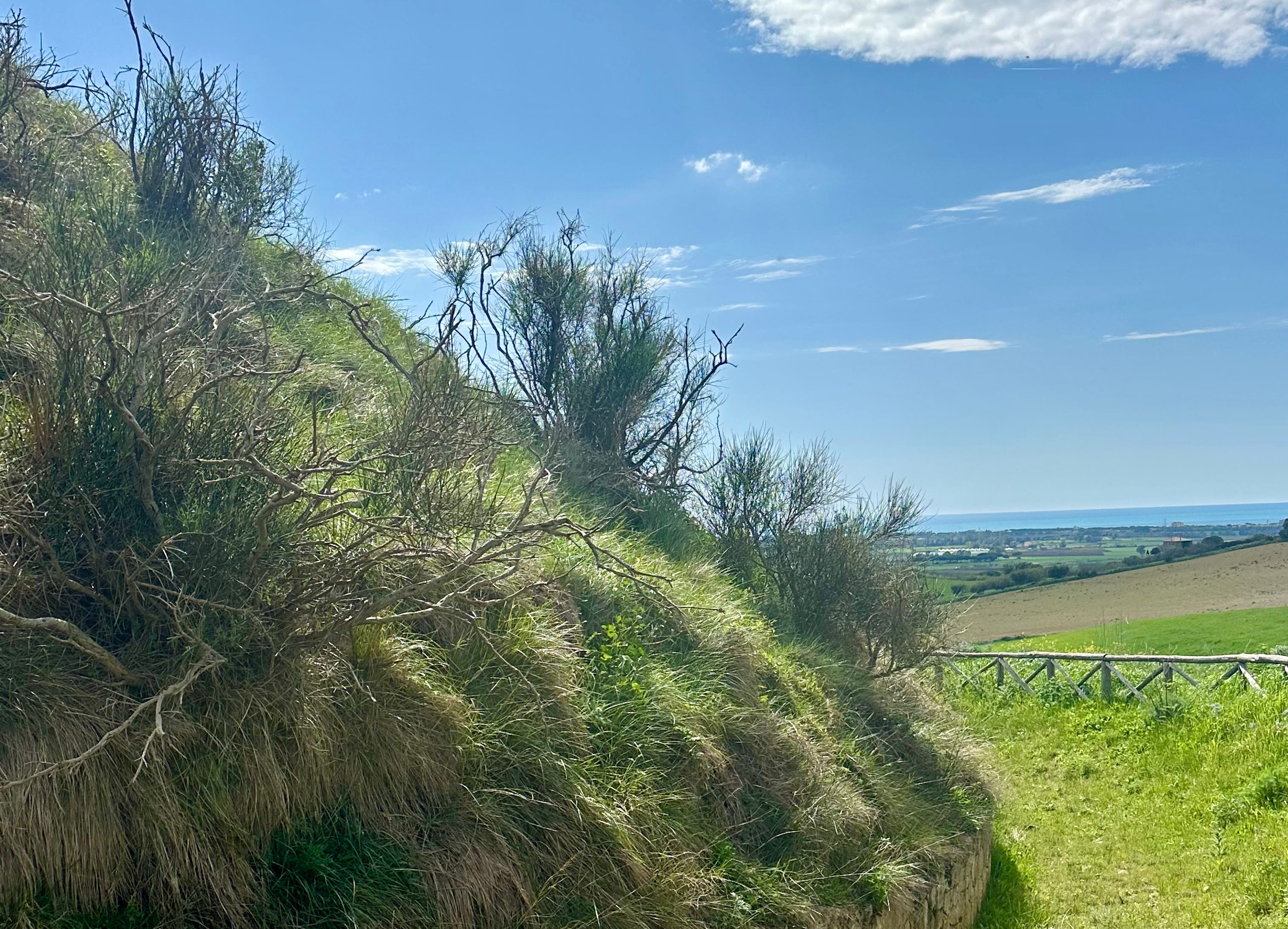
During investigations of the barrow in 1928, when it was already much depleted by looting, the discovery of a fragment of a vase bearing the name Rutile Hippacrates was found. This has been seen to hint at the “Etruscanising” of a Greek name. Together with the grandeur of the structure (it is thirty-five metres in diameter), and a plausible date of the seventh century BCE, this Greekish name has been seen as a possible link to Demeratus of Corinth who settled at Tarquinia in the seventh century BCE and married a local noblewoman. He is traditionally considered the father of Tarquinius Priscus, the semi-legendary fifth king of Rome and the first of the Etruscan rulers of the city. It is to Tarquinius Priscus that the eminently tangible projects of the Cloaca Maxima and the Temple of Jupiter Optimus Maximus on the Capitoline Hill are attributed; material public works, most definitely quite removed from the realm of legend.

There are some significant leaps of faith in the identification of the grand tumulus looking out over the Tyrrhenian, but it is enormously evocative of that blurring of hazy legend and hard fact that pervades the Mediterranean. We paused to absorb the wildly atmospheric spot, admire the glittering sea beyond, and took photographs—Rocco included; all of us entranced by the timeless idea of journeys made by canny Etruscans across the Mediterranean and of the seeds sown nearly three millennia ago before we drove back to the Caput Mundi which (perhaps) could trace the growth of its vast fortunes to that tumulus down a deserted unmetalled road up the coast.
love that you take people up the coast to visit these two special necropoli...and lunch at Il Pescatore next to the castello di Santa Severa. a great day trip from chaotic /hot Rome.
So much to learn from your posts on Rome. Thank you.