
August's Postcard from Rome

All photos taken on 2 August 2026
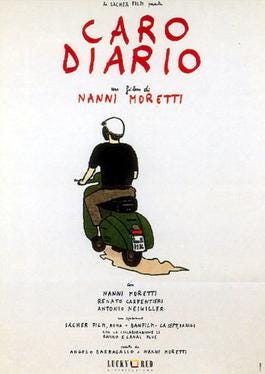
One of my favourite Roman August movies is, as I have mentioned many times, Caro Diario. Nanni Moretti’s 1993 film is a collection of semi-autobiographical musings, made as he breaches the cusp of his forties. The first of the three parts sees him riding around the deserted August streets of the residential districts of Rome on his Vespa. This, I thought when I first saw it many many moons ago, is exactly what I’d like to do. And so it came to pass.
In the opening scene, Nanni Moretti rides up via Dandolo, gently swooping to and fro across the deserted road framed by Innocenzo Sabbatini’s elegant nineteen-twenties apartment buildings, as it snakes its way up the slopes of the Janiculum Hill above Trastevere.
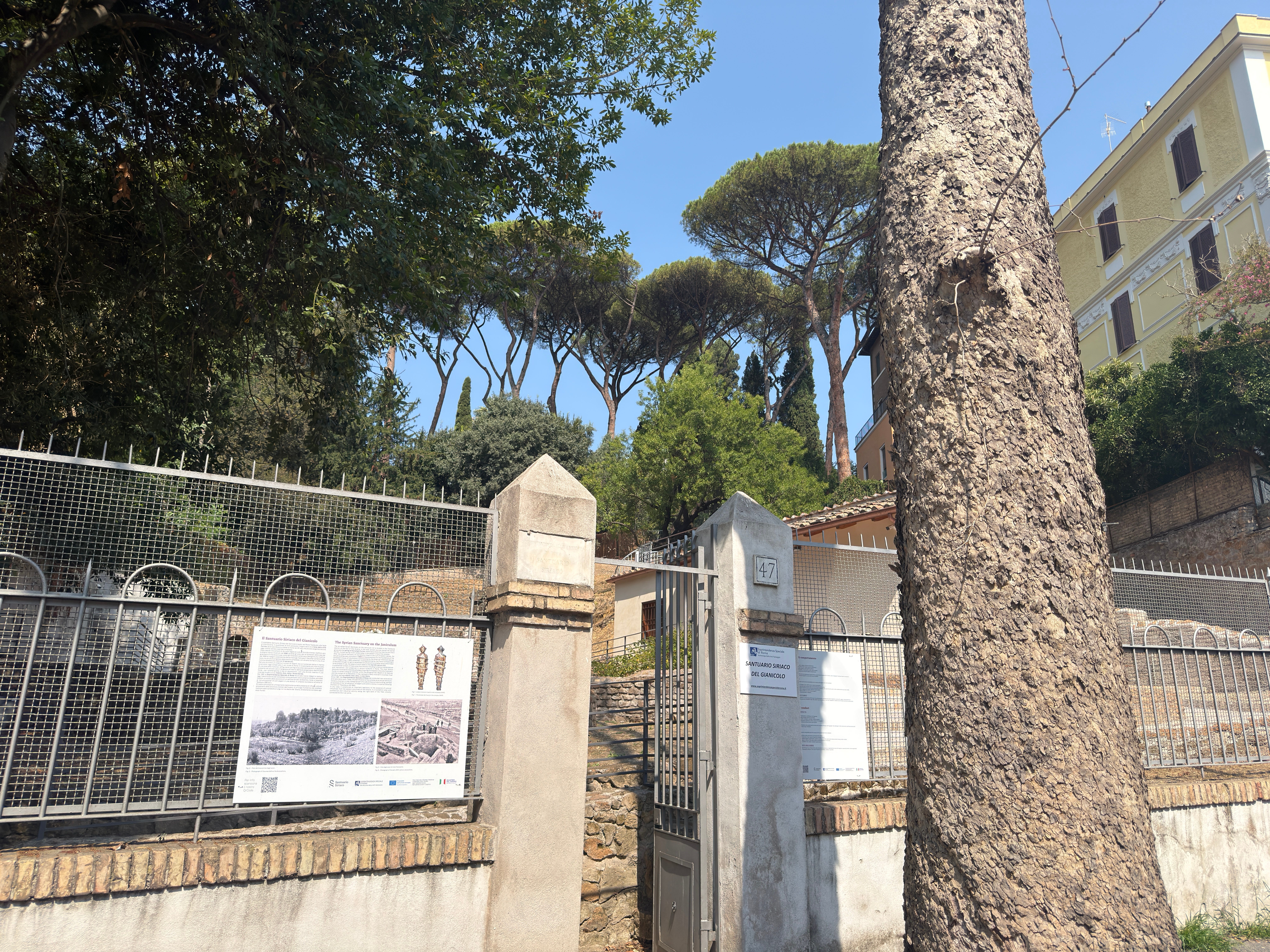
Last week, on the morning of the first Sunday of August, the city largely deserted as the relentless heat of this enervating summer continued into its third month—already almost unbearable at nine-thirty—I made a foray to via Dandolo on my slightly battered thirteen-year-old blue Vespa. My objective was the one-off (for now, there will be others anon) special opening of the newly restored and intriguing site of the “Syriac” sanctuary, on the site of a sacred wood once dedicated to the beyond-ancient Roman nymph Furrina.
The bosky atmosphere of sacred woods, watered by natural springs, makes them quite my favourite sort of archaic shrine; others of which I am fond in and around Rome include the Nyphaeum of Egeria, the Sanctuary of Diana Nemorense, and Lucus Feroniae, which marries my fondness for sacred woods with my penchant for a motorway service station). All of this atmosphere is particularly enhanced on a scorching, somnolent, August Sunday; parking spaces as far as the eye can see, and no sound but the chattering of cicadas in the pines (sound on for the tiny video above).
The name of via Dandolo—like so many of the streets that rise from Trastevere to Monteverde Vecchio: via Garibaldi; via Goffredo Mameli—is redolent of the blood shed here in the torturous creation of the capital of the new Italian state. The valiant, but ultimately thwarted, defence of the Roman Republic began with the Battle of 30 April 1849 and concluded two months later with the battle of Porta San Pancrazio (the links are to un-paywalled posts of mine). The Roman Republic was defeated, but the days of papal rule were numbered.
The Dandolo brothers, Emilio and Enrico, took part in the Cinque Giornate di Milano of 1848, the insurrection which led to the First Italian War of Independence. Their friends Luciano Manara and Emilio Morosini, who both have roads named for them here too, were also instrumental. Enrico (not to be confused with the Venetian Doge who died at Constantinople during the Fourth Crusade) died nearby following the battle above Villa Corsini on 3 June 1849, he was not quite twenty-two.
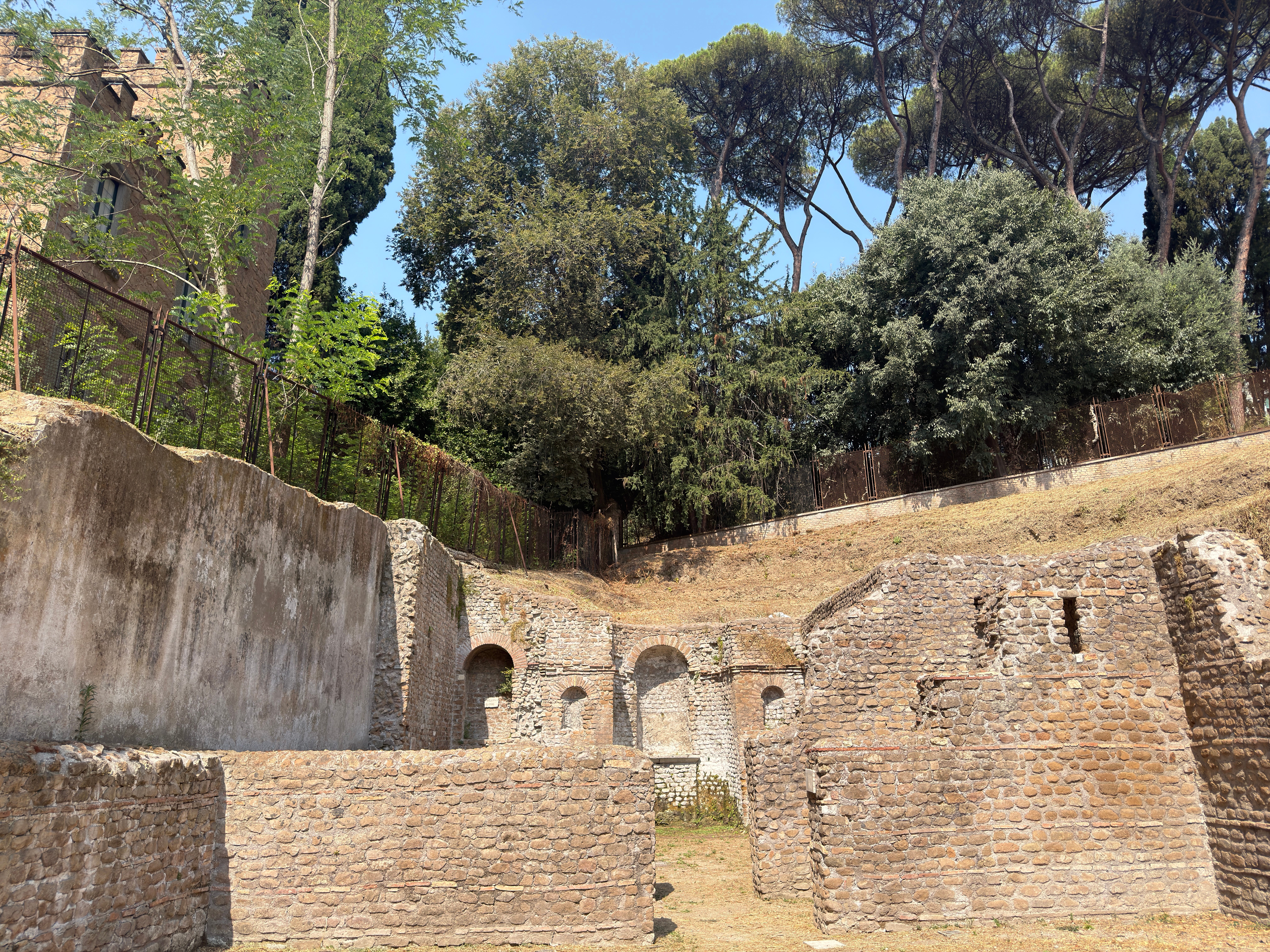
I’m sure that many of those youthful exponents of a new Republican fervour had in mind that it was here on the slopes of the Janiculum that, according to Plutarch, Gaius Gracchus had died in 121 BCE. We are told that Gaius had fled across the Tiber to escape his enemies and, upon reaching the sacred wood he ordered his slave to kill him. Subsequently the Lucus Furrinae would be swallowed up by the Gardens of Caesar, the Republic fell, and the Empire which emerged from its ashes rose and rose, before also falling.
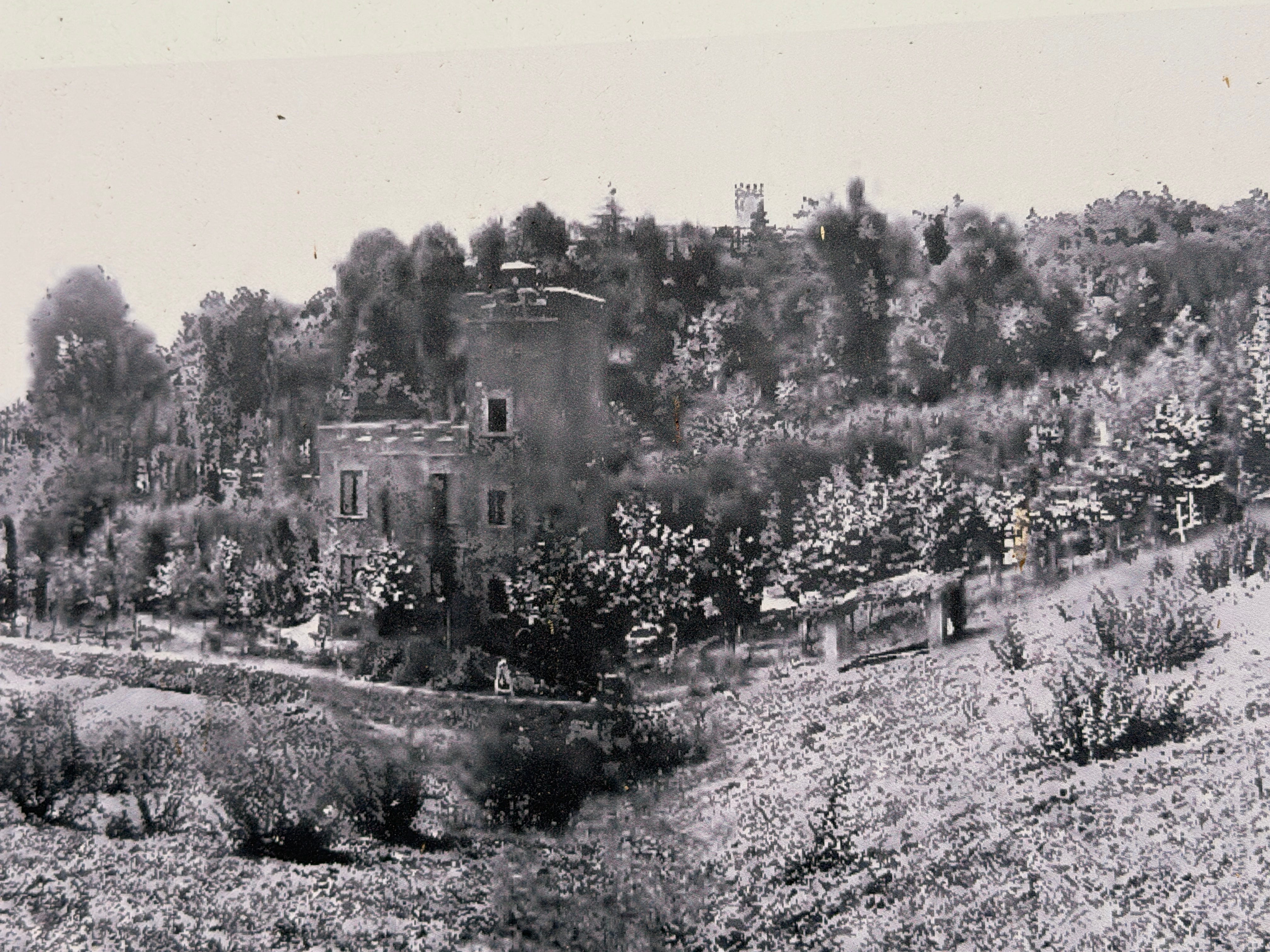
A millennium or so passed and in the Renaissance the conscious revival of the Horti of Antiquity became quite the thing, pleasure gardens on the edge of the city. The site of the once sacred wood passed from one grand Roman family to the next including to the Barberini and, by marriage, to the Colonna di Sciarra hence the name we know today.
In 1902 the Villa Sciarra (in Italy “villa” refers to the whole park, cf Villa Borghese, Villa Pamphilj etc) was bought by George Wurts, an American diplomat with a fondness for gardens, a significant inheritance, and an even richer wife. She was called Henrietta Tower and the industrialist father from whom she inherited, making her one of the richest women in the United States, was an industrialist called Charlemagne Tower which is, I think we can agree, a brilliant name.
Following the chance discovery of inscriptions in the lower part of the gardens suggesting the veneration of Eastern Mediterranean religious cults, in 1908 the French Academy began excavations, led by Paul Gauckler; In the first instance the site was identified with a sanctuary dedicated to deities which had originated in the east of the Roman Empire, hence the “Syriac” epithet. Subsequent studies have suggested
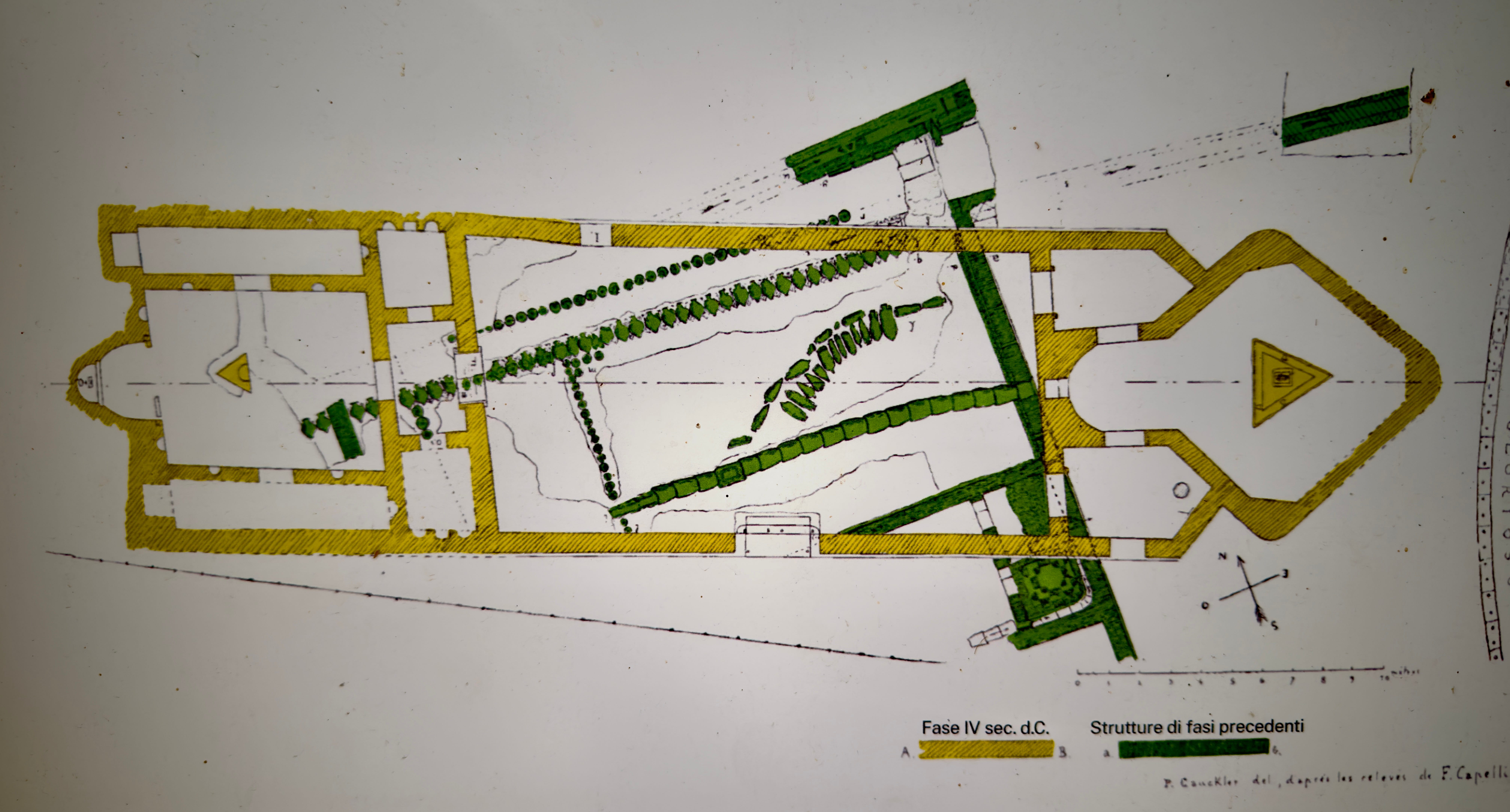
In fact the dominant, and latest, of the ancient structures discovered date to the late fourth century (identified from the building technique of opus vittatum). These include a hall with an apse which is cut into the hillside (on the left of the plan above).
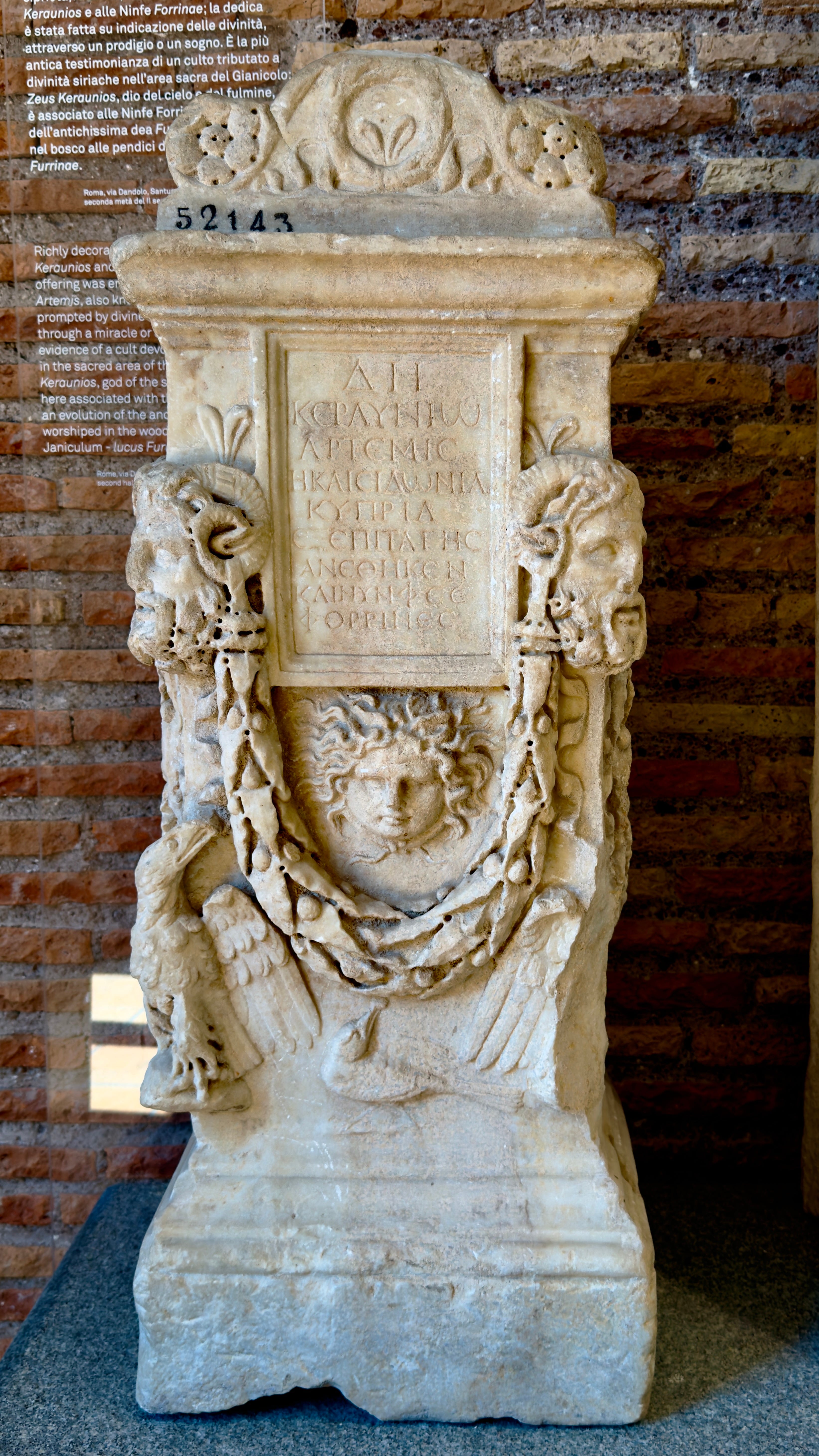
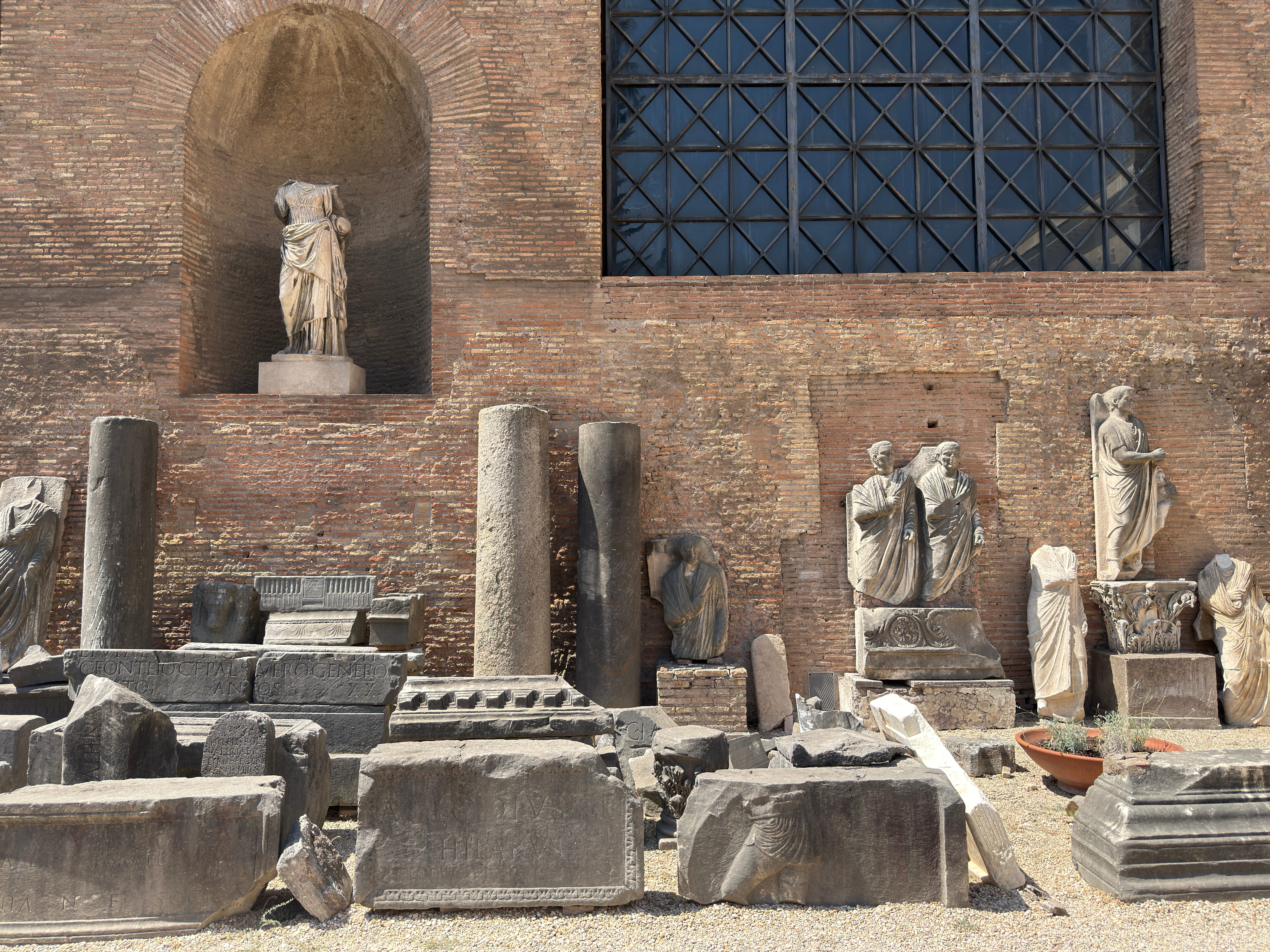
Among the inscriptions discovered is the second century CE altar pictured above dedicated by a Cypriot woman following a dream to Zeus Keraunios (Zeus of the thunderbolt) and mentioning the Forrinae (by the high period of empire a single nymph had become a proliferation). It is written in Greek and is a fabulous reminder of the eclectic mashup of the Roman religion and today can be found in the (excellent, always quiet) Museo Nazionale Romano at the Baths of Diocletian.
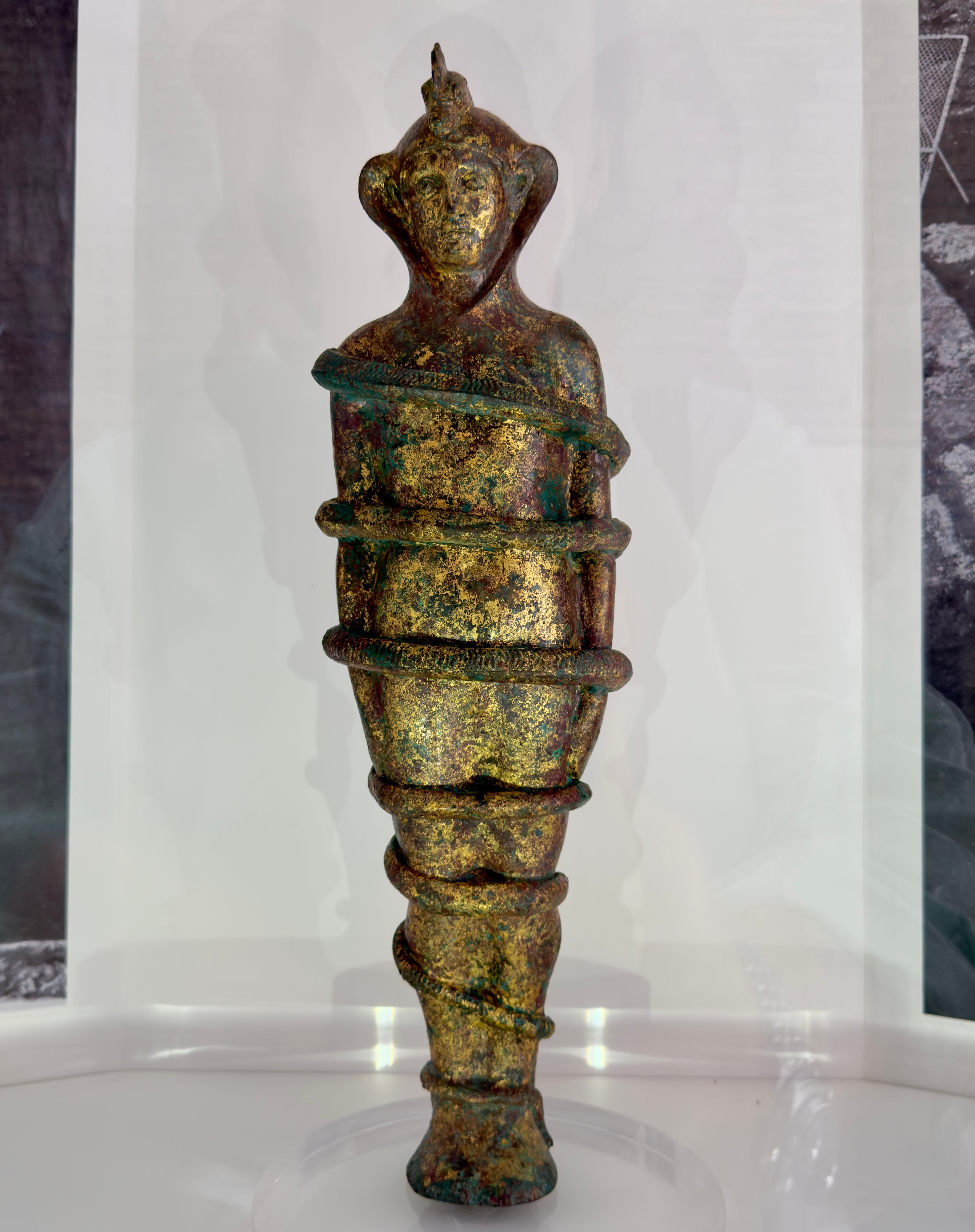
The most celebrated and spectacular find was the small gilded bronze statue of a figure wrapped in snakes which is shown in the photograph at the top of this post. It has been identified as perhaps a figure inspired by Attis or Osiris—both deities with origins in the eastern Mediterranean; both associated with fertility.
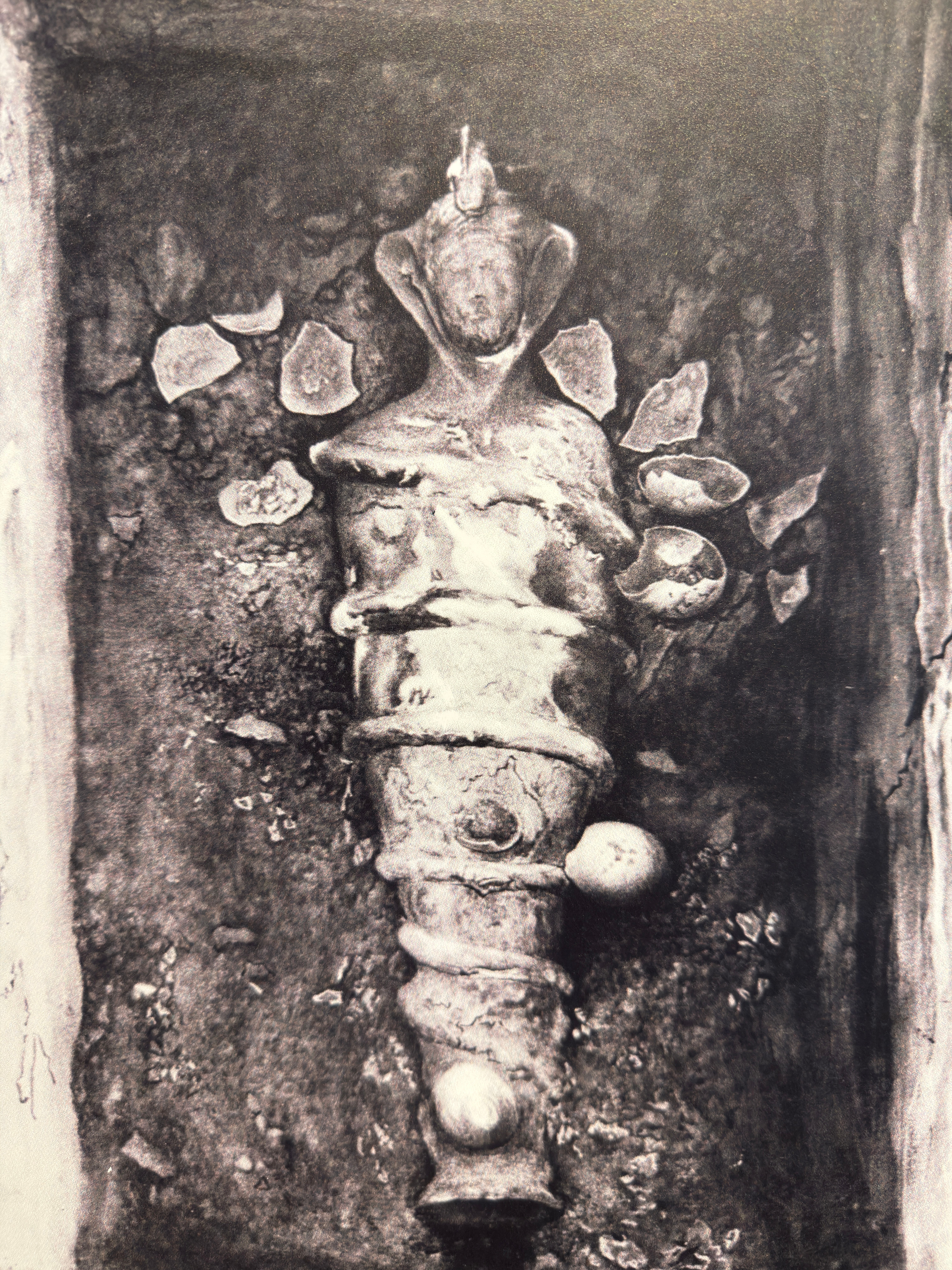
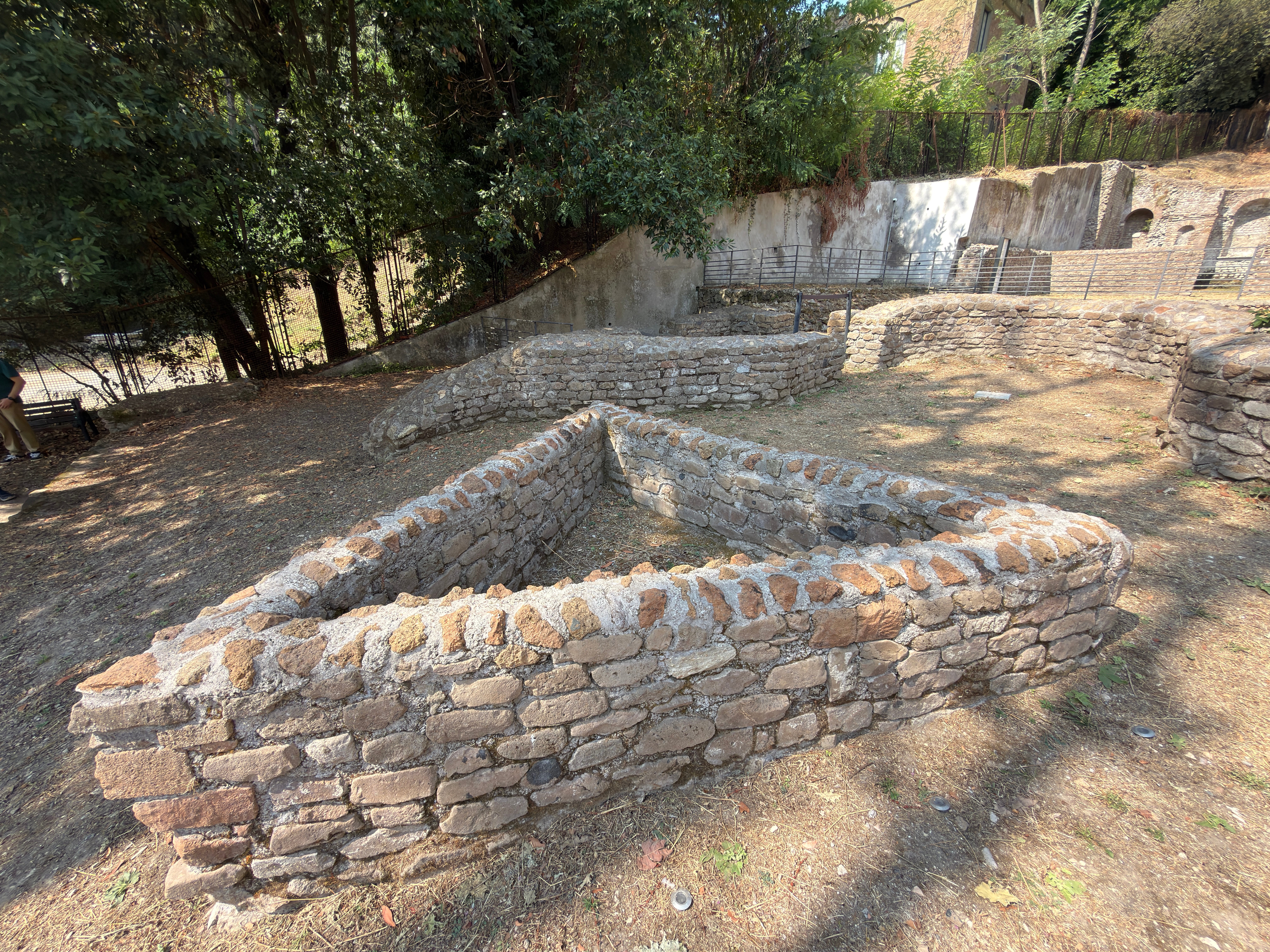
The statuette was discovered in the triangular structure pictured above (which is on the right of the plan) buried in a ritual pit beneath offerings of eggs, seeds, and flowers.
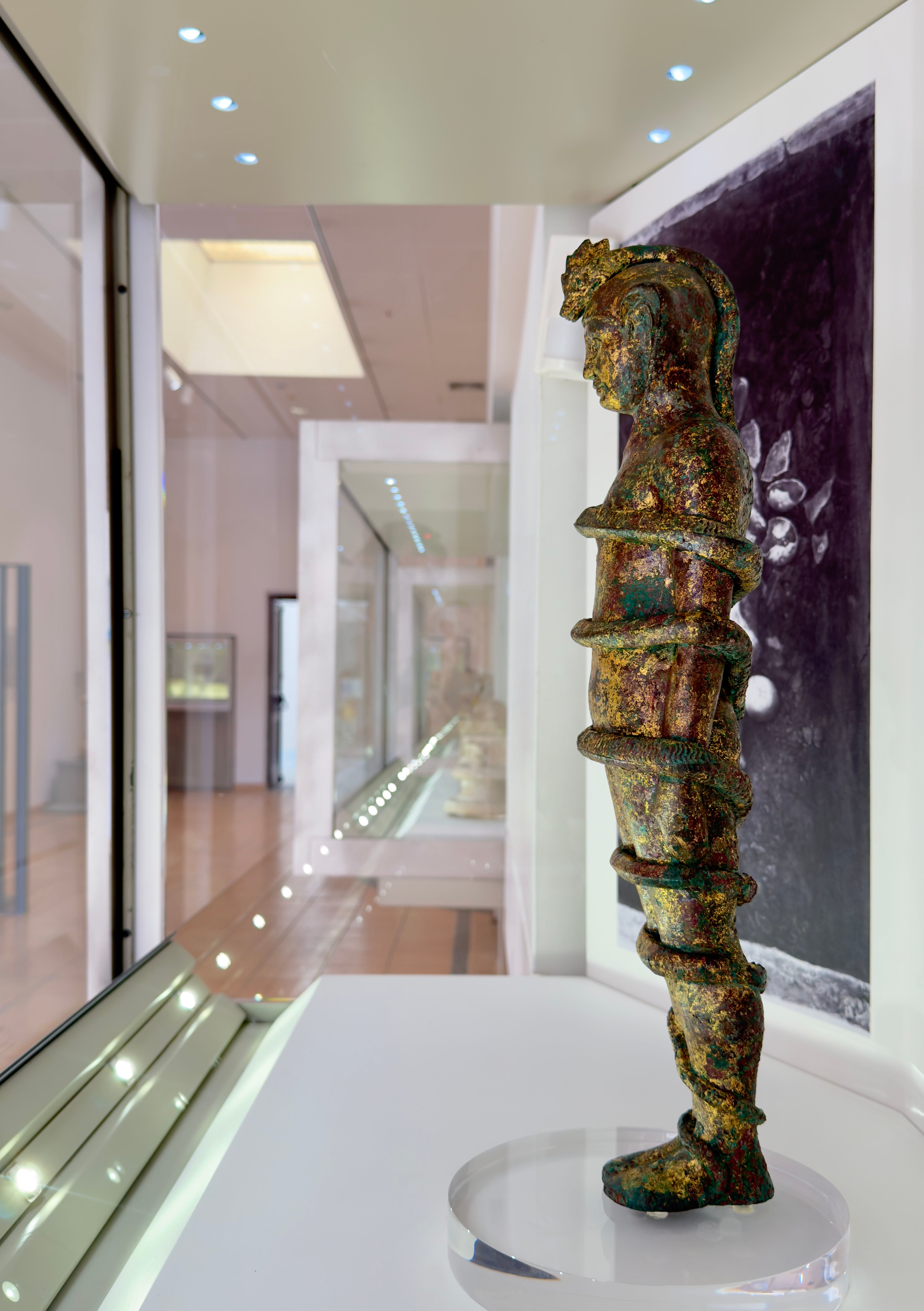
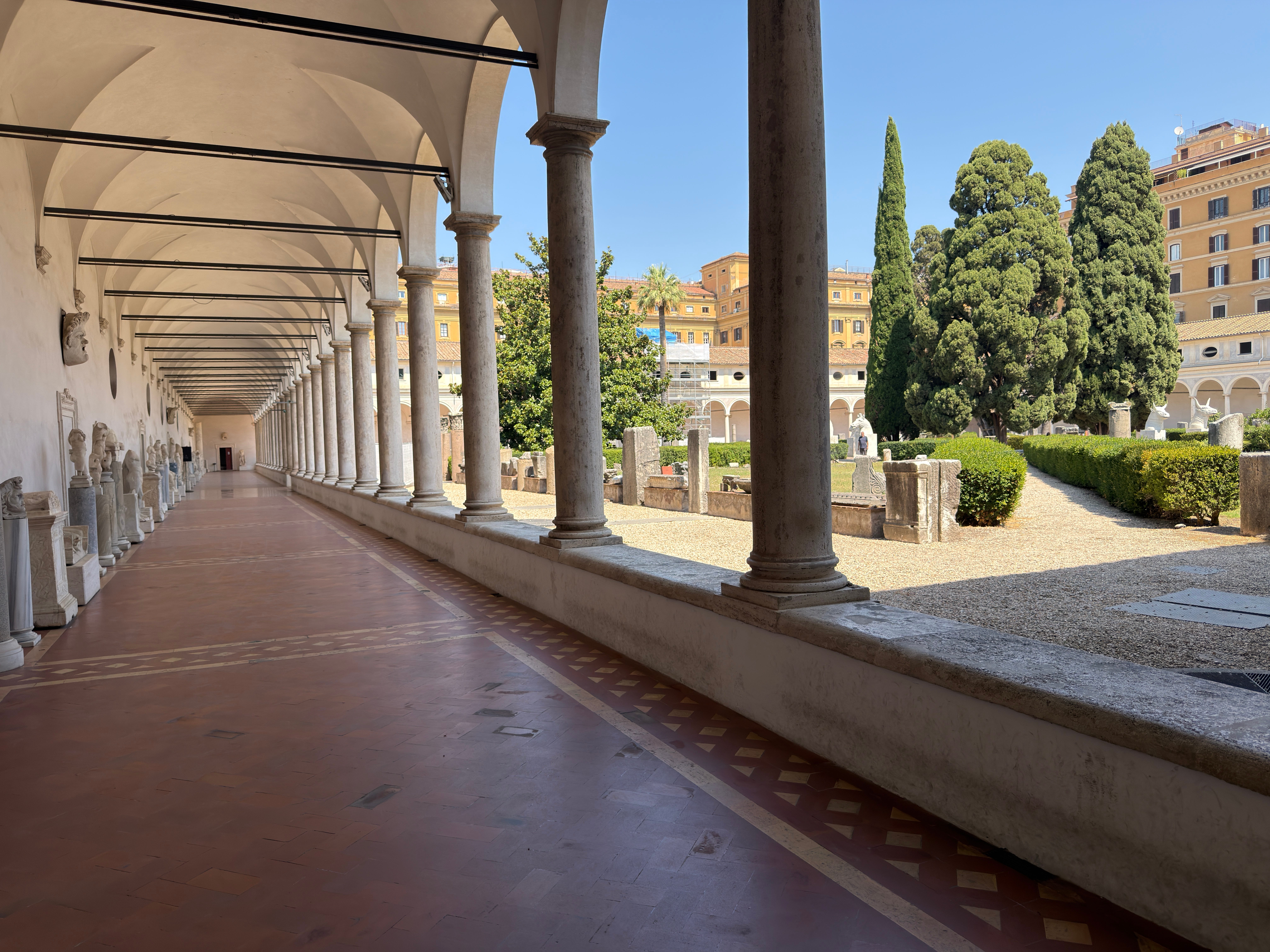
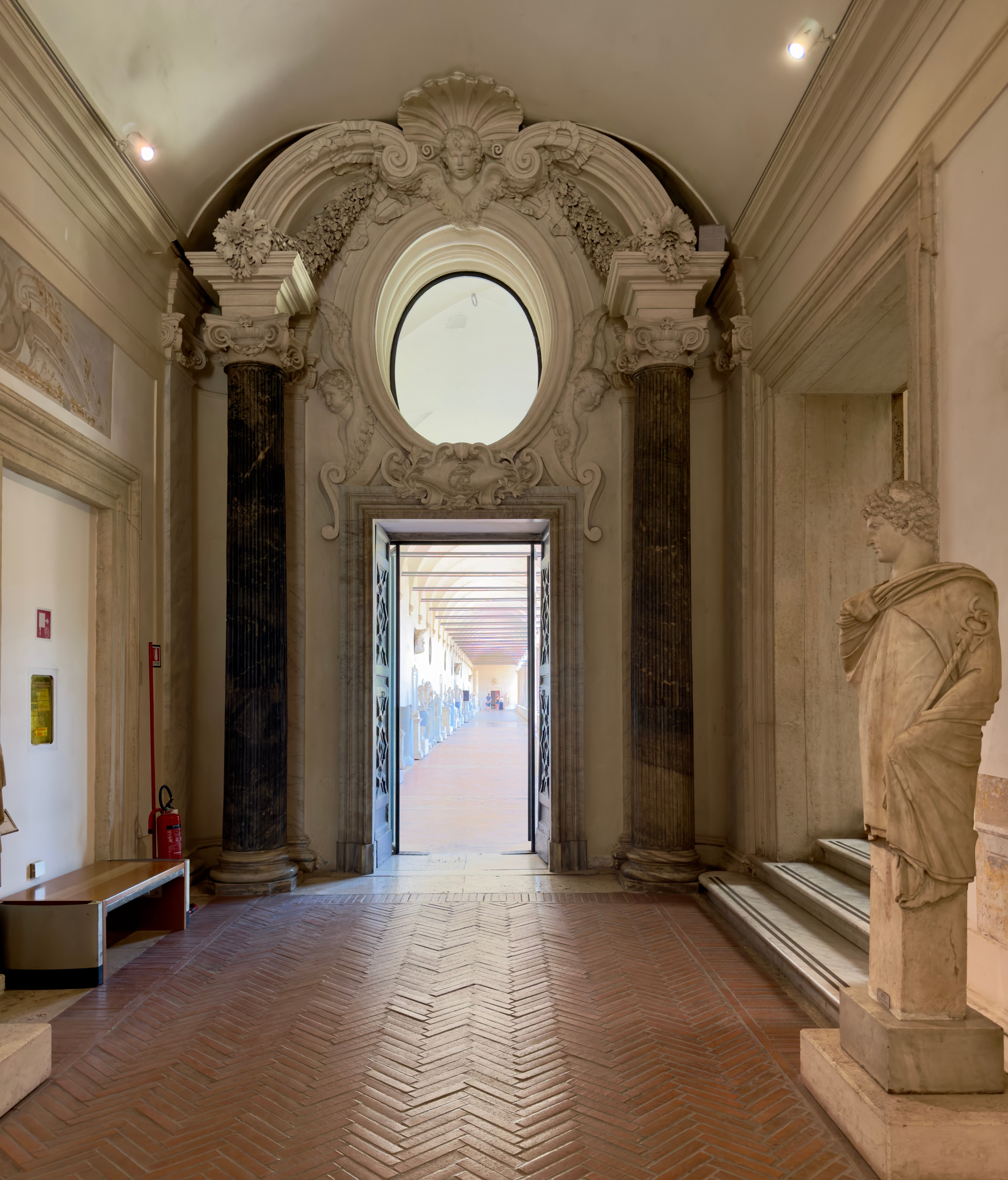
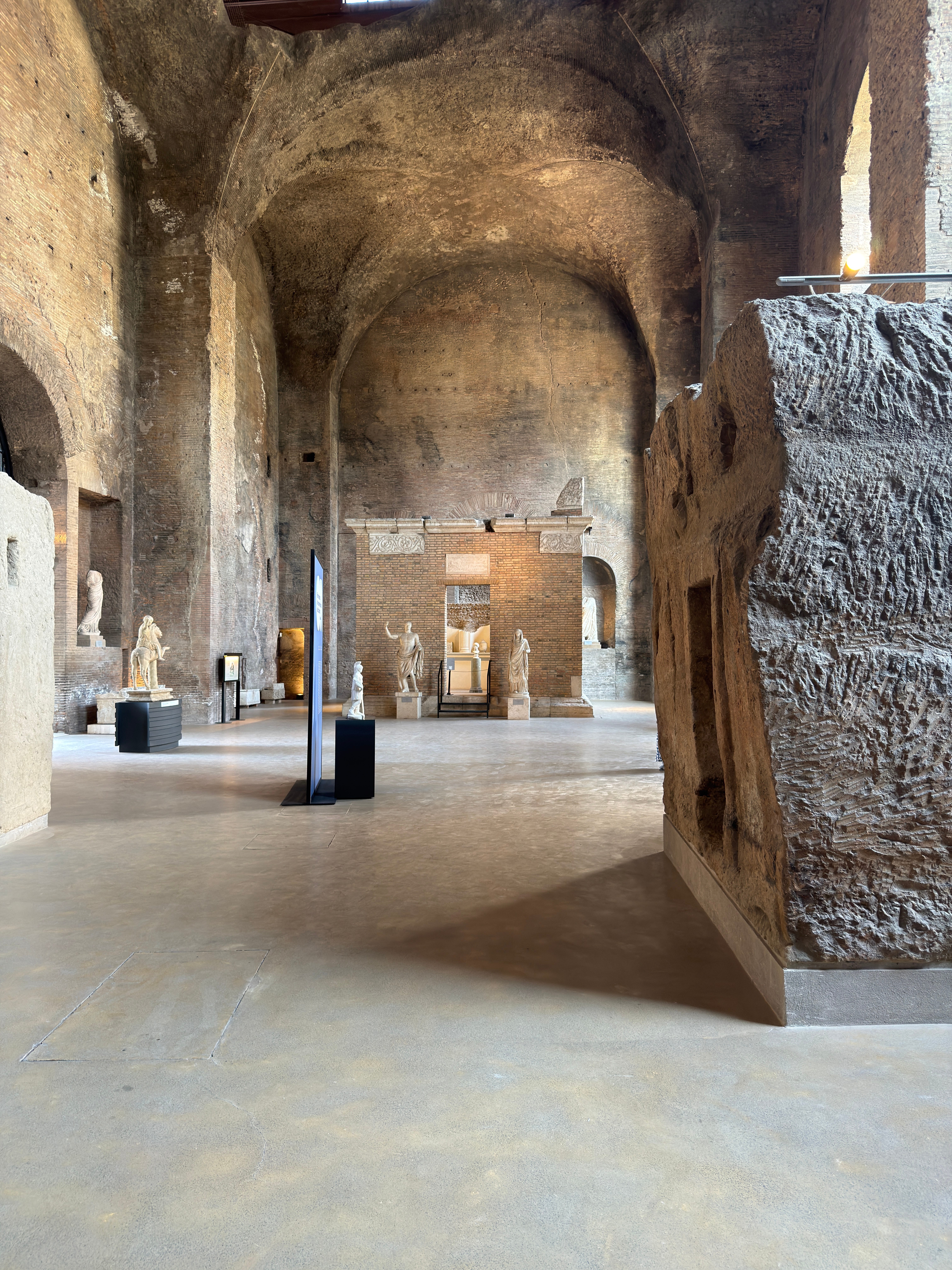
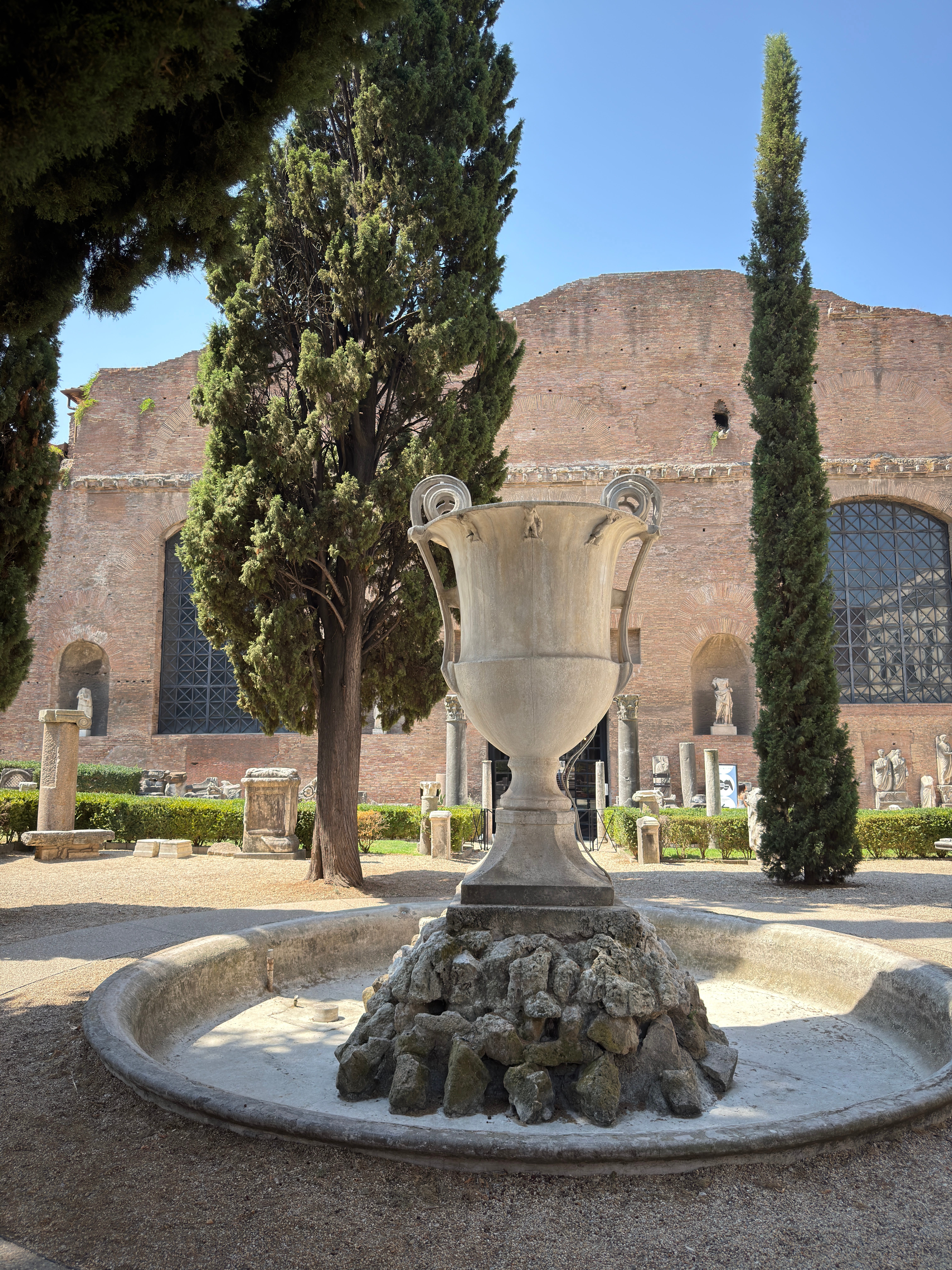
I bade farewell to the nymphs of the sacred wood, cicadas and all, and crossed the river and scootered up the Esquiline Hill to the Baths of Diocletian, there to reacquaint myself with the statuette and those intriguing eastern inscriptions. It is yet another reminder to visit this vast, excellent, and bewilderingly empty museum: part of the largest Roman bath complex ever built, a remodelling by Michelangelo, and an extraordinary and beautifully displayed and described collection of ancient inscriptions. Plus, tucked away in corner room, a gilded statuette of an Eastern deity found amid eggshells in a sacred wood where patriotic heroes of Roman Republics ancient and modern fell. What’s not to love?
Saluti!
Agnes
Thanks for this post Agnes - The site you describe is new to me and I appreciate your ability to always uncover something "new" in one of the most ancient of cities. I too continue to be surprised that the Museum at the Baths of Diocletian seem consistently empty. Not that I'm complaining as I had the glorious bronze sculpture of the boxer and other wonderful artifacts very nearly to myself. As always, my gratitude for your interesting and insightful writing.
Yet another wonderful column from Agnes, beautifully written as she showcases the hidden splendors of the Città Eterna! Thank you Agnes 🔝👏💐