Extravagant Eclecticism: Glimpses of Quartiere Coppedè

Just outside the Aurelian Walls, pretty much equidistant from three delightful parks (Villa Borghese, Villa Ada, and Villa Torlonia), and firmly ensconced in the natural habitat of a tranche of Rome’s haute bourgeoisie is an fabulous and slightly barmy example of early twentieth century eclecticism.
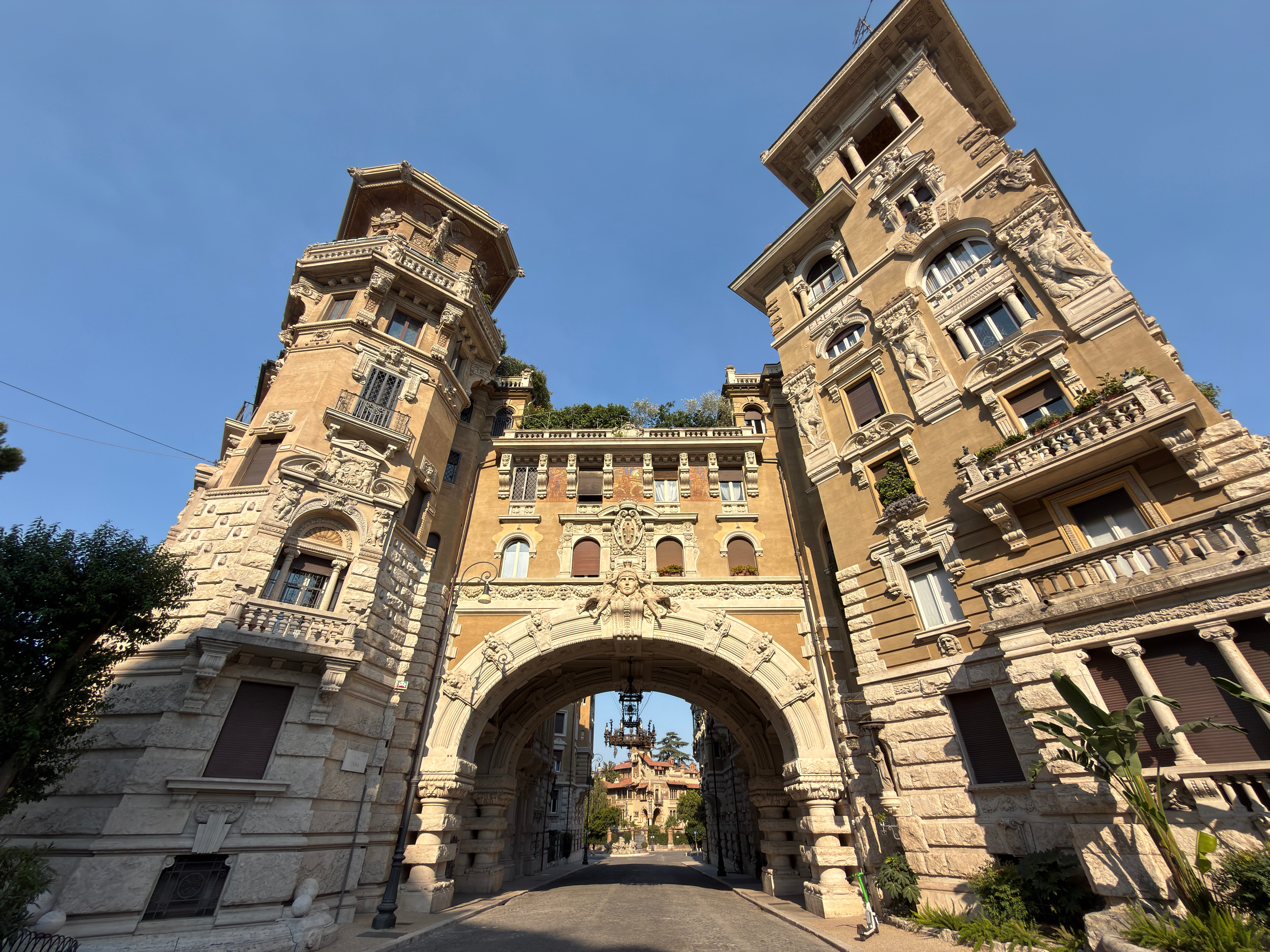
The Quartiere Coppedè, really just a handful of streets tucked between via Tagliamento and viale Regina Margherita, best entered at via Dora, is named for its architect Luigi (Gino) Coppedè. He was born in Florence in 1866 and trained there first at the then recently established School of Industrial Decorative Arts and then took a diploma in architectural drawing at the Accademia di Belle Arti (rather less recently established; it was founded by Cosimo I de’Medici) which qualified him to practise architecture.
In Rome the building of the new capital of the Kingdom of Italy, begun after the proclamation of Roma Capitale in 1871, gathered speed and a new piano regolatore (city plan) was ratified in 1909. Previous plans had developed, inter alia, the area around piazza Vittorio Emanuele and the neighbourhood of Prati. The 1909 plans, drawn up by Edmondo Sanjust di Teulada—civil engineer, Sardinian aristocrat, and (subsquently) senator of the Kingdom of Italy—were implemented by the then mayor of the city, Ernesto Nathan. Among the plans was scope for a new residential building project in the rapidly growing neighbourhoods to the north-east of the Aurelian Walls, between the tuff outcrops of the Monti Parioli and the new districts of Trieste and Salaria.
In 1915 the enigmatically named Società Anonima Edilizia Moderna (The Anonymous Modern Architecture Company) commissioned Gino Coppedè, who had been working on plans for the remodelling of Genoa, to design the mini-neighbourhood. Work began in 1916 and stuttered on, interrupted by war and administrative hurdles, until Coppedè’s death in 1927, when the unfinished project was completed by his brother-in-law, Paolo Emilio André.
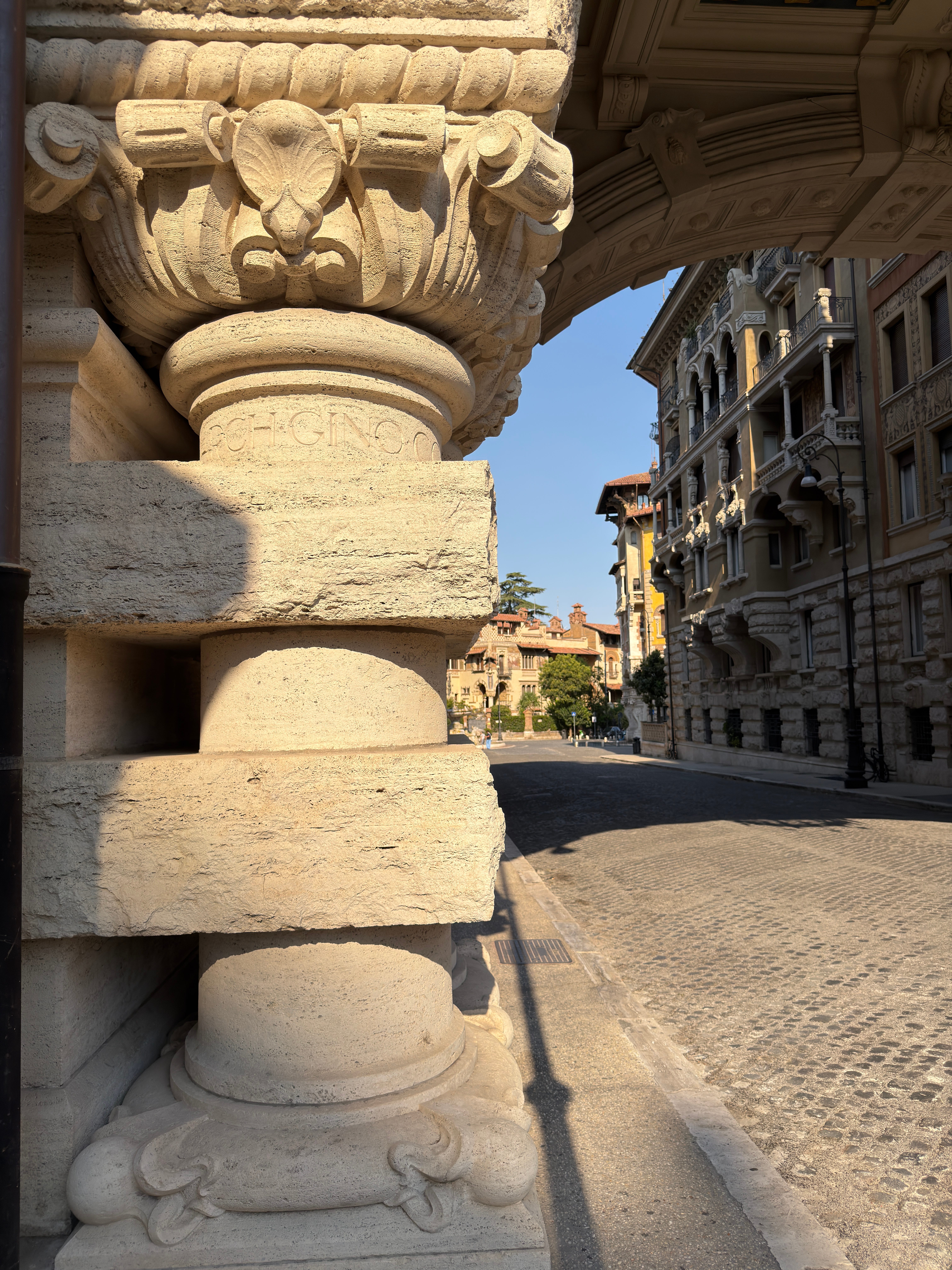
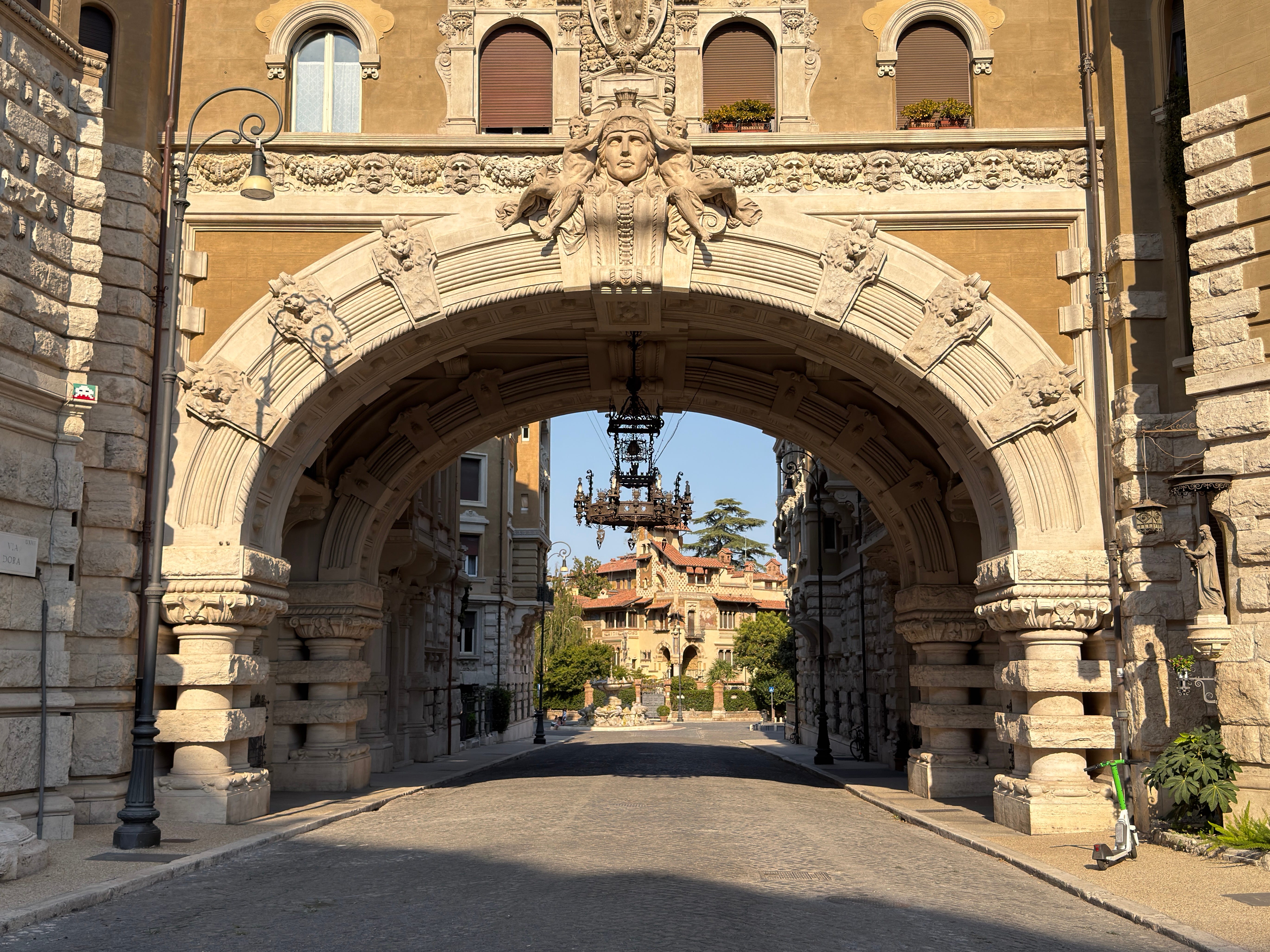
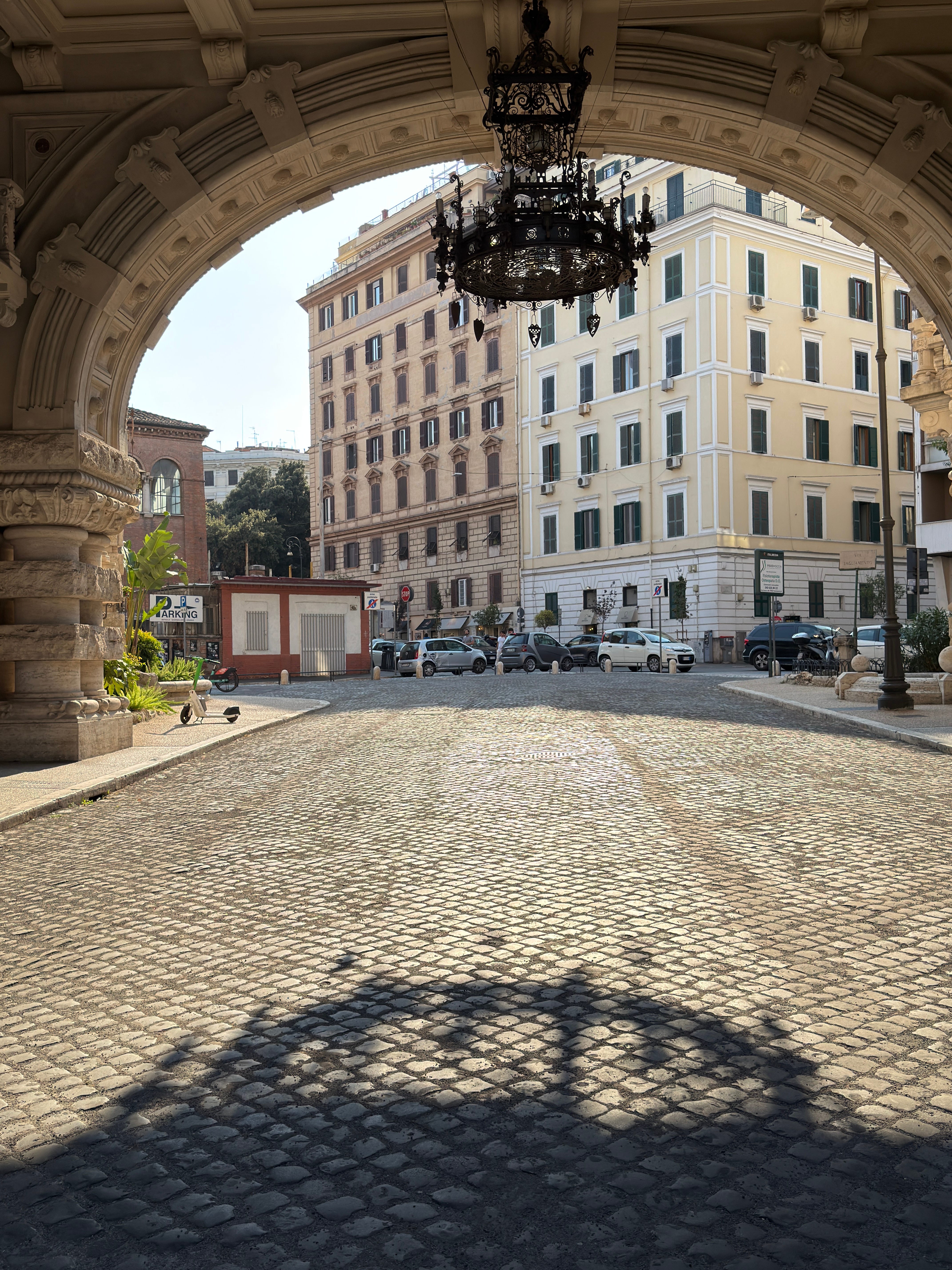
The Quartiere Coppedè is best approached from via Tagliamento, taking via Dora which gives the first, wildly scenographic, glimpse of the eclectic and eccentric project. Indeed it has featured in many a movie, from Dario Argento’s Inferno to House of Gucci.
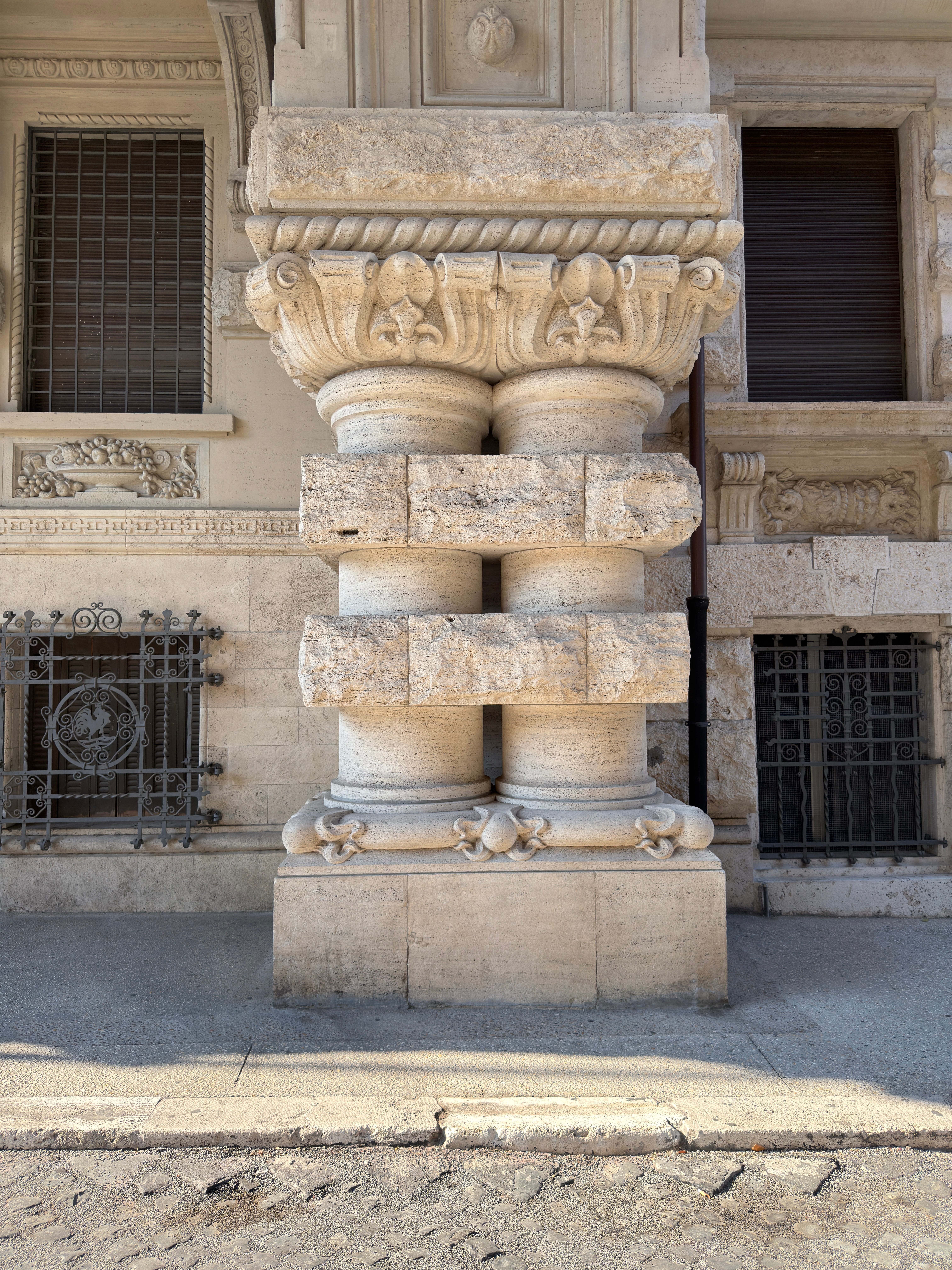
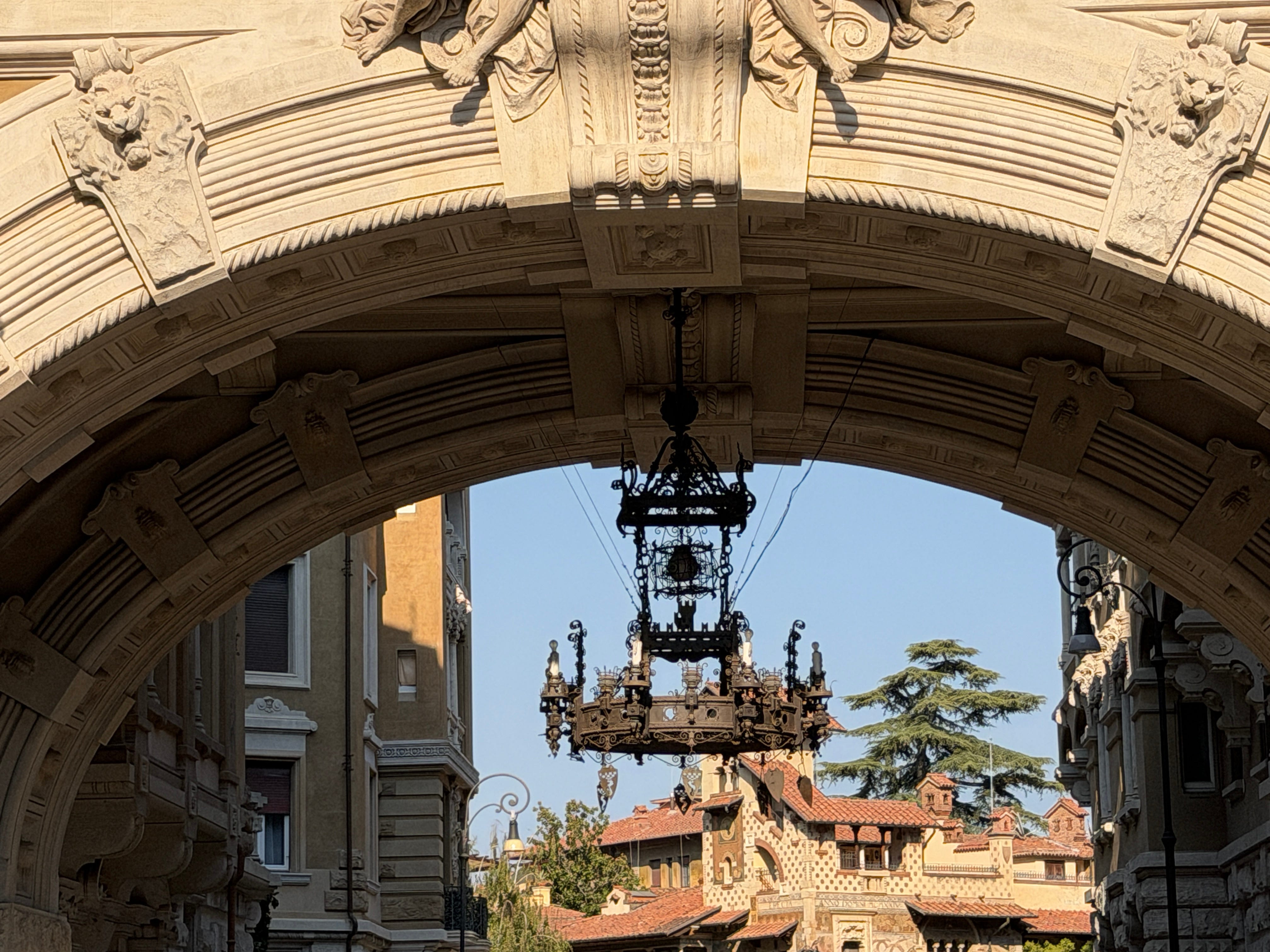
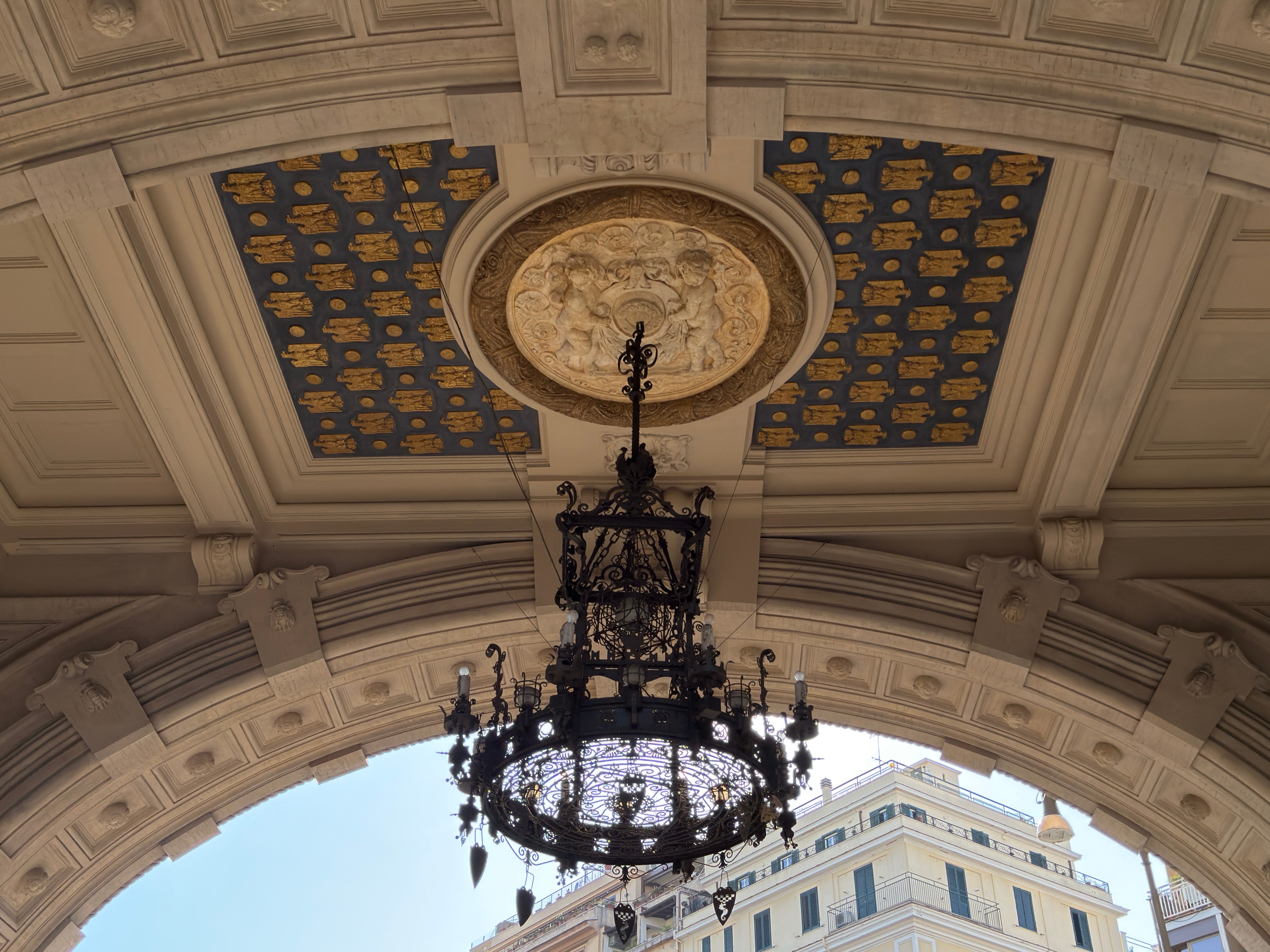
The Palazzi degli Ambasciatori are joined by an arch below which hangs a vast chandelier which appears to have been pinched from a medieval banqueting hall.
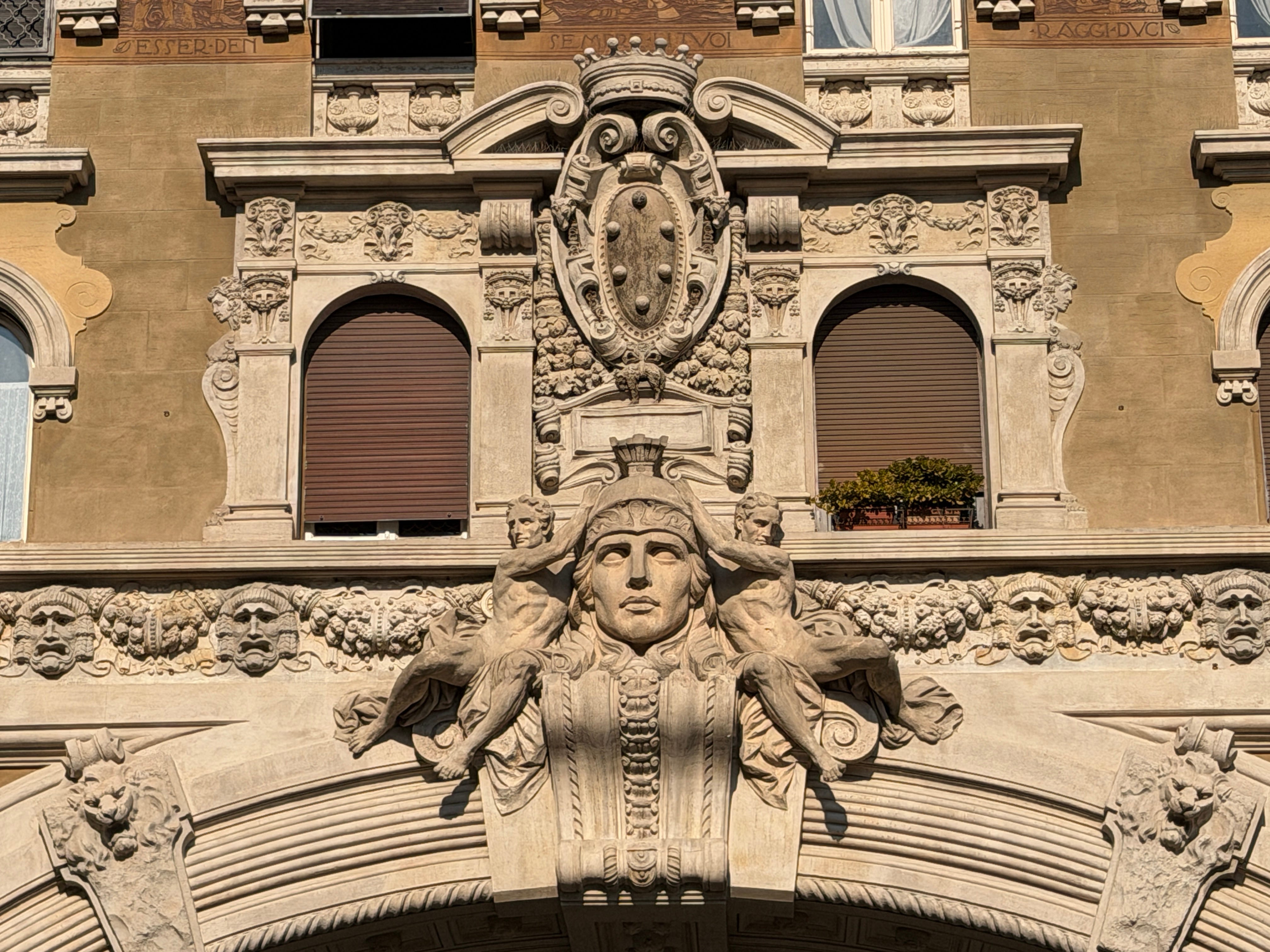
Above, a pseudo-crest (based on that of the Medici) is topped with a crown. From the bottom of the shield hangs the symbol of the Order of the Golden Fleece, an order of chivalry instituted in 1430 by Philip the Good, Duke of Burgundy. It was indeed an order awarded to a number of members of the Medici family, though here is purely decorative. Below, a stern head of a helmeted deity surmounts the keystone and garlands, bucrania, and theatrical masks abound.