
Bessarion, the Flagellation, and the Fall of Constantinople

In my most recent monthly newsletter I mentioned that the Piero della Francesca lecture trip I led last month took us on a foray to the palace of “Duke Federico of glorious memory” at Urbino. There we admired Piero’s Flagellation, described by Kenneth Clark as “the greatest small painting in the world”.
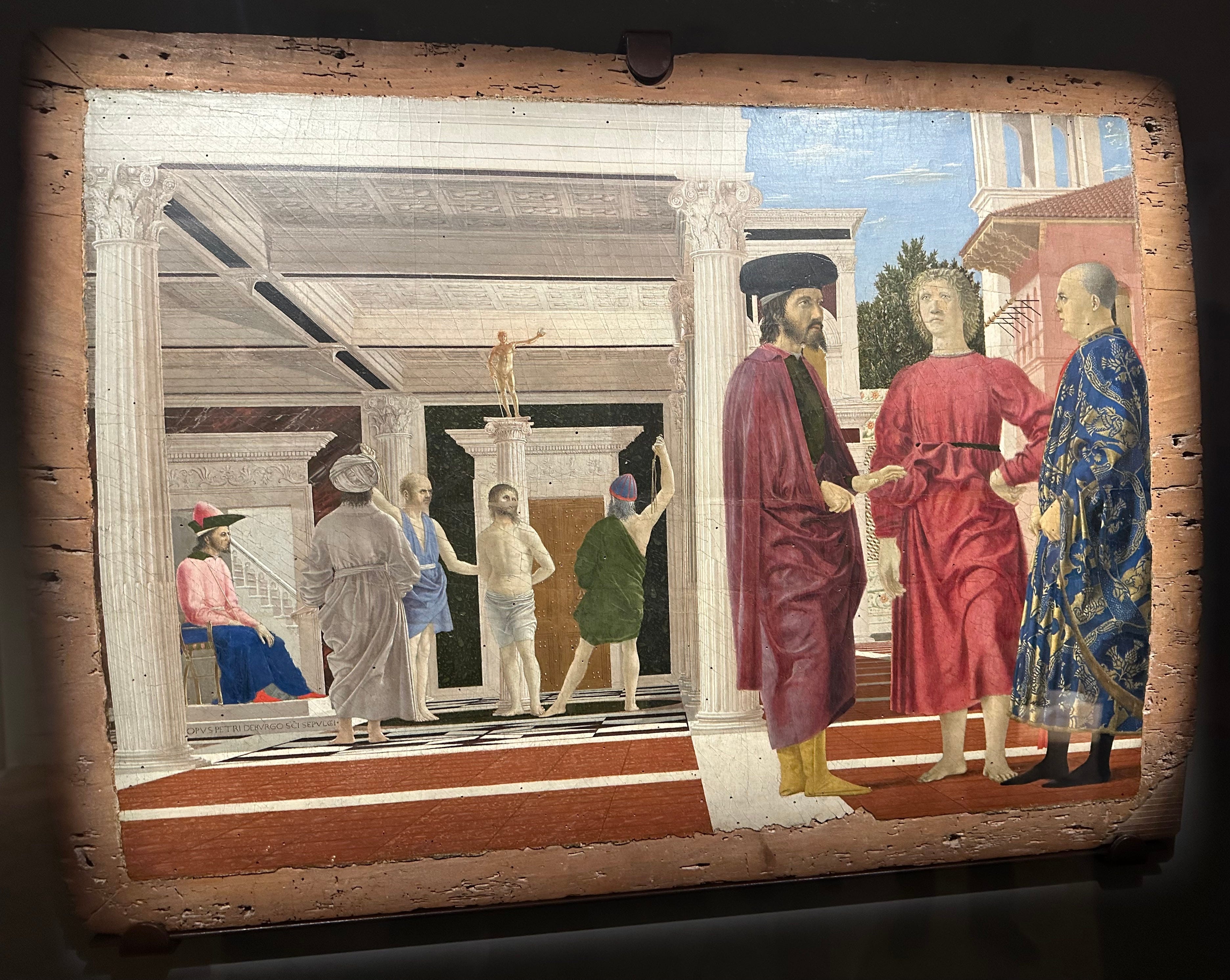
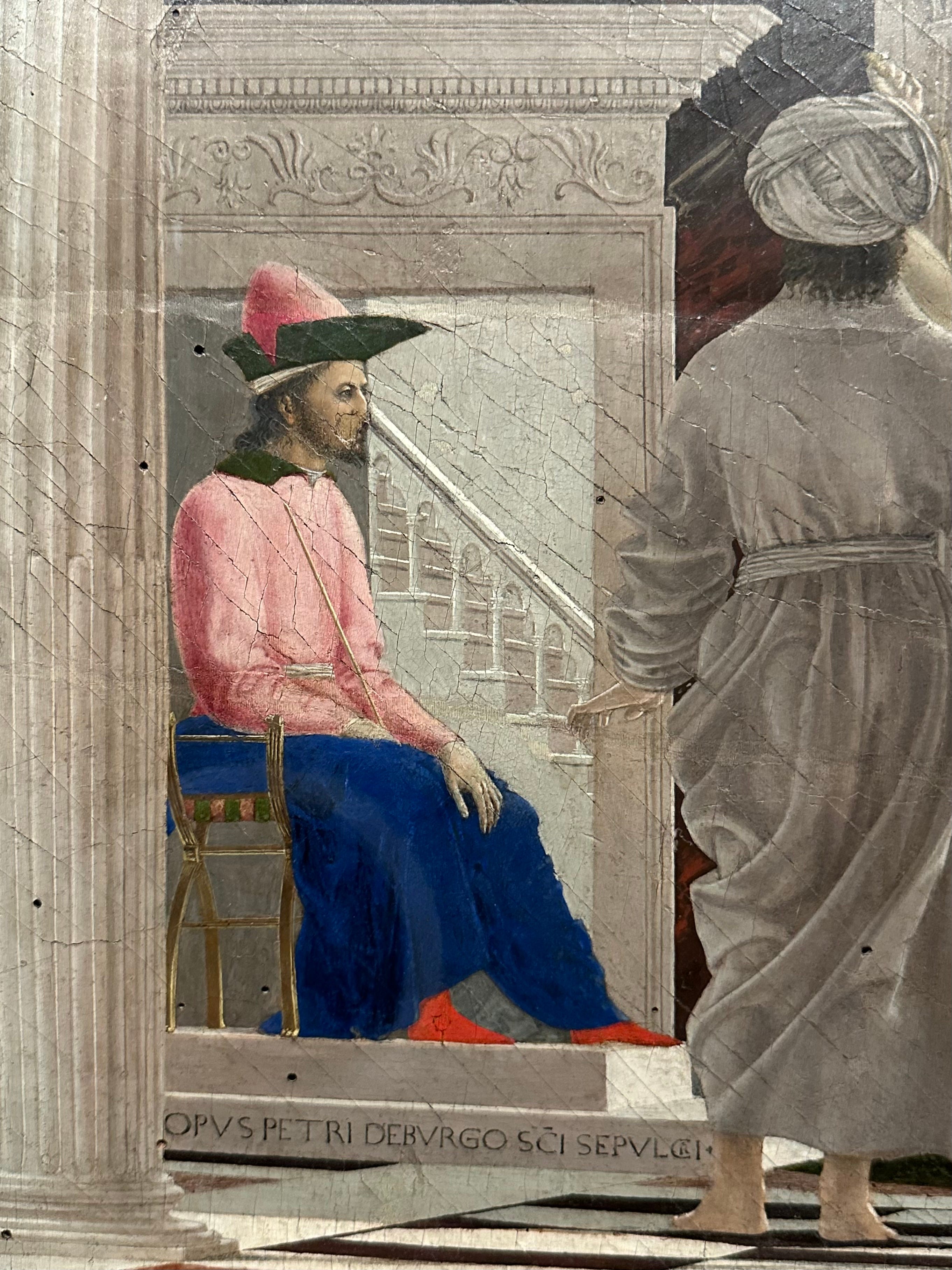
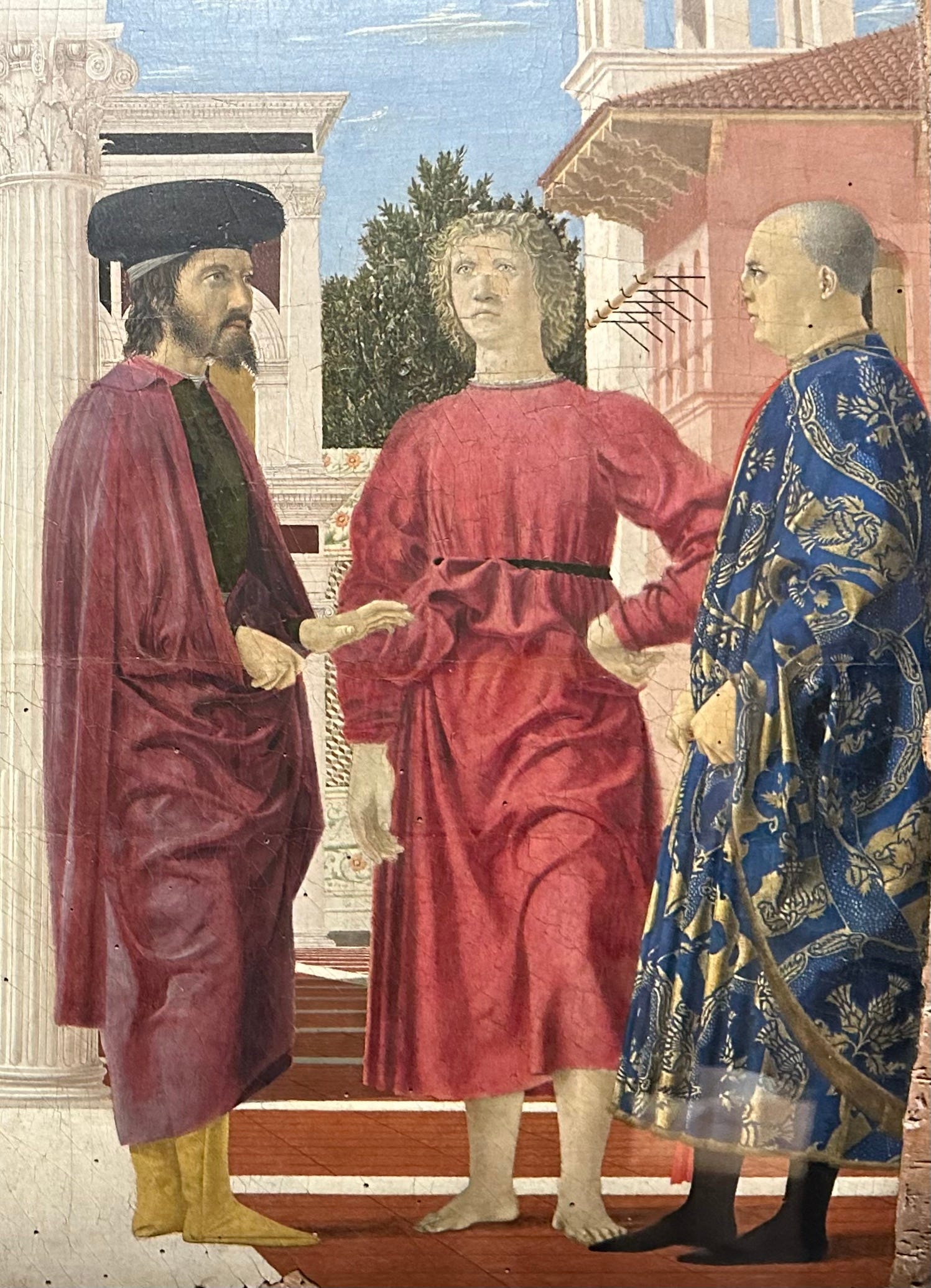
It is a splendidly enigmatic picture. Elegantly classical architecture divides the scene in two: to the right of the painting is a group of three men while in the background Christ’s Flagellation is almost an incidental detail. The scourging of Christ is overseen by Pontius Pilate who sits on a throne which bears Piero’s signature—Opus Petri de Borgus S[an[c[t]i Sepolcri. The enigma of the painting’s meaning rests on the identity of the three men, long the subject of discussion.
A traditional reading says that the central figure, a barefoot blond young man, is Oddantonio de Montefeltro. Oddantonio was the first Duke of Urbino, created by Pope Eugene IV in recognition of his support in the war against the Sforzas of Milan. He was the younger half-brother to Federico, but the legitimate heir of their father Guidantonio, Lord of Urbino and Oddantonio’s brief and extravagant reign concluded with his untimely and violent death in a palace conspiracy. He had been, it was said, ill-advised by Manfredo dei Pio da Carpi and Tommaso di Guido dell’Agnello who were also killed and are, in this reading, identified with the other two men in the group. Oddantonio’s death is thus echoed by the treachery which led to the flagellation of Christ in the background.
Another interpretation, first mooted by the German art historian Felix Witting in 1898, looks instead at the painting within the context of the defining political event in of quattrocento Italy: the fall of the Byzantine Empire following the Ottoman sacking of Constantinople in 1453.
With Byzantium in dire straits, Emperor John VIII Palaeologos sought the support of Rome. The profound and atavistic differences of the Catholic and Orthodox Churches were to be set aside, that they might present a united front against the common threat of the Ottoman Empire. To this end the Council of Florence was convened in 1439 and, not without dissent in the East, the papal bull Laetentur Caeli (Let the Heavens Rejoice) was signed by the Emperor and Pope Eugene IV. Heavenly rejoicing was, for Byzantium, short-lived and the support of the Roman Church proved to be both too little and too late.
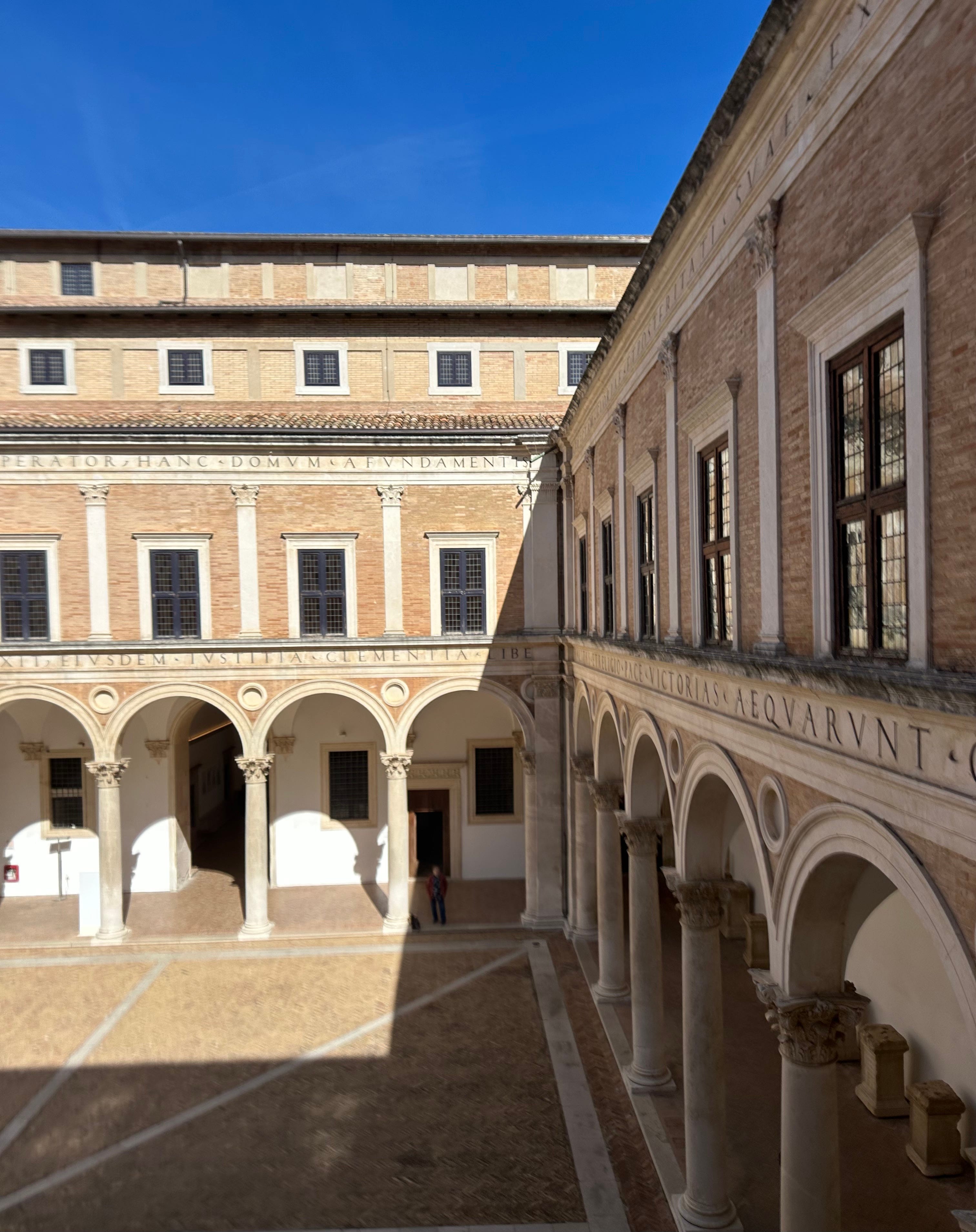
The various theories regarding the identities of the three men which have as their fulcrum the suffering of Byzantium represented by the scourging of Christ involve Cardinal Bessarion in one way or another. There are also undoubtedly neat connections between Bessarion and Urbino: it was here that the Eastern cardinal baptised Guidubaldo, son and heir to Federico da Montefeltro; Bessarion is to be found among the eclectic bunch of illustrious men who feature in Federico’s studiolo.
Born at the beginning of the fifteenth century with the Christian name Basil to a family of limited means at Trebizond in Asia Minor, Bessarion was the name chosen upon his ordination in honour of the Desert Father, Bessarion of Egypt. He is an extremely interesting figure: A Greek Byzantine Renaissance humanist of inestimable erudition; Latin Patriarch of Constantinople; twice papabile1 . For Lorenzo Valla he was inter graecos latinissimus, inter latinos graecissimus (Most Latin of the Greeks, most Greek of the Latins) and his diplomatic skills and, eventual, willingness to accept union saw him accompany John VIII, the penultimate Byzantine Emperor, to Italy to attend the Councils of Ferrara and Florence.
Keep reading with a 7-day free trial
Subscribe to Understanding Rome's Newsletter to keep reading this post and get 7 days of free access to the full post archives.